
Mawlid is an annual festival marking the birthday of the Prophet Muhammad, observed on the 12th (or 17th) of Rabi I, the third month of the Islamic calendar. It is widely celebrated in Muslim-majority countries and communities with poetry, processions, feasts, and prayers.
- Commemorates the birth of Prophet Muhammad
- Celebrated on 12 or 17 Rabi I in the Islamic calendar
- Features poetry, processions, and communal feasts
- Official holiday in many Muslim-majority countries
- Observed by both Sunni and Shia Muslims
What it is
Mawlid, also known as Mawlid al-Nabi, is the commemoration of the birth of the Prophet Muhammad, a day of deep spiritual and communal significance for many Muslims. The festival is marked by gatherings where poetry and songs in praise of Muhammad are recited, and stories from his life are shared. For those who observe it, Mawlid is a time to express love and gratitude for the Prophet, reflect on his teachings, and strengthen bonds within the community. While widely celebrated, views on Mawlid differ among Islamic traditions, with some regarding it as a cherished occasion and others viewing it as an innovation.
Where it comes from
The origins of Mawlid trace back to the early centuries of Islam, with private gatherings and recitations honoring Muhammad's birth. Public celebrations are believed to have begun in the 12th century, notably when the general Gökböri hosted a grand ceremony in Medina. The festival gained official status under the Ottomans in the late 16th century. Some historians suggest that early forms of Mawlid were influenced by Sufi practices and may have roots in Fatimid Egypt, where court processions marked the occasion. Over time, Mawlid evolved into a widespread public festival across the Muslim world.
How it is celebrated
Mawlid is celebrated with a variety of customs that reflect local traditions and interpretations. Central to the festival are gatherings known as mahfils, where participants recite religious poetry and songs in praise of Muhammad. Feasts are shared, and charity is distributed to the poor. In many regions, homes, mosques, and streets are decorated, and public processions fill the streets with color and music. Some communities observe supererogatory fasting, special prayers, and dhikr (remembrance of God). Children may recite poetry, and stories of the Prophet's life are narrated. The atmosphere is festive yet reverent, with an emphasis on community, generosity, and spiritual reflection.


Joining in
Visitors to countries where Mawlid is widely observed, such as Egypt, India, Indonesia, Turkey, and Morocco, can expect vibrant public processions, decorated mosques, and gatherings filled with music and poetry. Major cities often host large communal feasts and charity events. As a newcomer, it is respectful to dress modestly and observe local customs. Participation is generally open, especially in public celebrations, though the mood can range from joyful to contemplative depending on the community. It is a unique opportunity to witness expressions of devotion and hospitality.
Sources and attribution
This page is Mela's own summary, written in new words. Its facts are drawn from the Wikipedia article Mawlid, whose text is available under the CC BY-SA 4.0 licence, and from its Wikidata record (CC0). Each photo is credited to its author beside it. For the full account, read the originals below.
Read more
- Mawlid on WikipediaEncyclopedia
- Encyclopaedia BritannicaArticle
- More photos on Wikimedia CommonsPhotos
- Wikidata recordOpen data
This page was written with AI assistance from the sources listed above, and checked automatically before publishing. Spotted a mistake? Tell us. Last refreshed 2026-10-02.
More spiritual festivals
See them all Spiritual
15Aug
Assumption of Mary🇦🇹 Austria and 32 more countries
Spiritual
15Aug
Assumption of Mary🇦🇹 Austria and 32 more countries
 Spiritual
Augvaries
Obon Festival🇯🇵 Japan and 7 more countries
Spiritual
Augvaries
Obon Festival🇯🇵 Japan and 7 more countries
 Spiritual
Augvaries
Dormition of the Mother of God🇷🇺 Russia and 9 more countries
Spiritual
Augvaries
Dormition of the Mother of God🇷🇺 Russia and 9 more countries
 Spiritual
Augvaries
Raksha Bandhan🇮🇳 India and 4 more countries
Spiritual
Augvaries
Raksha Bandhan🇮🇳 India and 4 more countries
 Spiritual
16Aug
Ghost Festival🇰🇭 Cambodia and 14 more countries
Spiritual
16Aug
Ghost Festival🇰🇭 Cambodia and 14 more countries
 Spiritual
22Aug
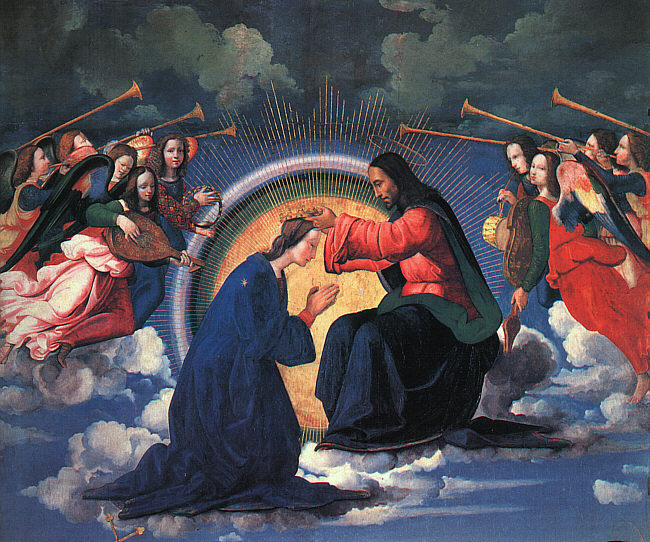
Queenship of Mary🇦🇹 Austria and 9 more countries
Spiritual
22Aug
Queenship of Mary🇦🇹 Austria and 9 more countries
 Spiritual
Augvaries
Beheading of John the Baptist🇧🇾 Belarus and 19 more countries
Spiritual
Augvaries
Beheading of John the Baptist🇧🇾 Belarus and 19 more countries
 Spiritual
Augvaries
Carneia🇬🇷 Sparta, Greece and 1 more country
Spiritual
Augvaries
Carneia🇬🇷 Sparta, Greece and 1 more country