
Festival of Lights
Berlin’s landmarks transformed by light, art, and creative vision each autumn
The Festival of Lights is an annual arts event in Berlin, Germany, held from September to October. Landmarks and public spaces across the city are illuminated with light installations, projections, and 3D mapping, drawing artists and visitors from around the world.
- Berlin’s landmarks are illuminated with artful light projections
- Features the World Championship of Projection Mapping
- A record-breaking 60-meter light clock was created at Marx-Engels Forum
- The festival draws over 2 million visitors annually
- Includes a 7.5 km ‘light run’ through illuminated streets
What it is
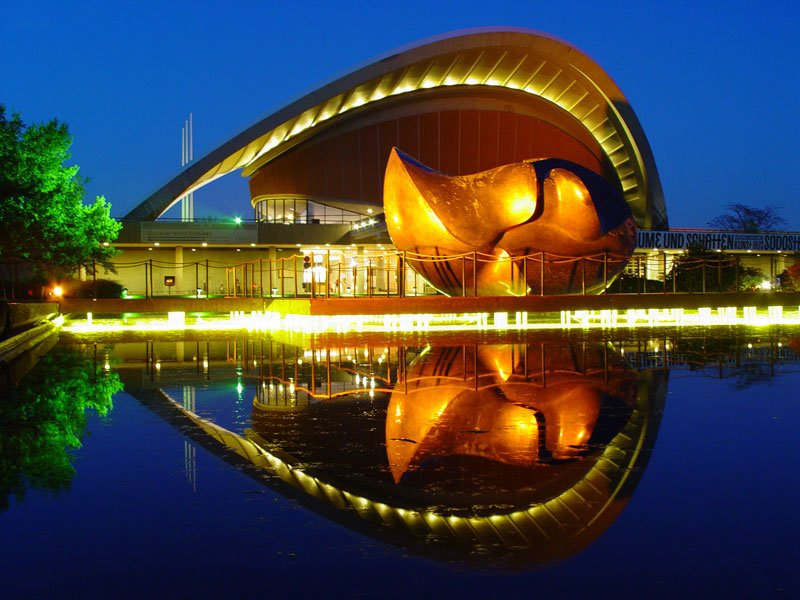
The Festival of Lights in Berlin is a city-wide celebration where art and technology meet to transform the urban landscape. Each year, Berlin’s most famous landmarks—such as the Brandenburg Gate, Berlin TV Tower, and Berlin Cathedral—are illuminated with vibrant light installations and intricate 3D projections. Artists from around the globe contribute their visions, turning the city into a living gallery after dark. The festival is free and open to all, inviting locals and visitors alike to explore Berlin’s streets in a new light and experience the city’s creative spirit.
Where it comes from
The Festival of Lights began in 2005 and has since become a signature event in Berlin’s cultural calendar. Its origins lie in the idea of using light as a medium to celebrate the city’s architecture and history, while fostering international artistic exchange. Over the years, the festival has grown in scale and ambition, introducing new artistic formats and drawing millions of visitors. Special moments, such as the illumination of Nikolaikirche’s towers in white to commemorate a local legend, and record-breaking installations like the world’s largest light clock, have marked its evolution.
How it is celebrated
During the Festival of Lights, Berlin’s landmarks, streets, and squares are transformed by large-scale light projections, 3D video mappings, and interactive installations. Each edition features a unique motto, guiding the artistic direction of the displays. Highlights include the World Championship of Projection Mapping, where leading video artists compete with dazzling 3D shows, and special themed illuminations for anniversaries or social causes. Public events such as the ‘light run’—a 7.5 km jogging route lined with illuminated buildings—invite active participation. Museums, theaters, embassies, and companies often open their doors for light-themed presentations, making the whole city part of the celebration.
Joining in
Visitors can experience the Festival of Lights simply by walking through Berlin’s city center after dark, as many of the main installations are outdoors and free to view. Key sites include the Brandenburg Gate, Berlin Cathedral, and Bebelplatz, but the festival map changes each year. Expect crowds, especially at major landmarks, and a festive atmosphere as locals and tourists alike stroll, photograph, and enjoy the illuminated cityscape. Comfortable shoes and a camera are recommended for those wishing to take in as many installations as possible.
Sources and attribution
This page is Mela's own summary, written in new words. Its facts are drawn from the Wikipedia article Festival of Lights (Berlin), whose text is available under the CC BY-SA 4.0 licence, and from its Wikidata record (CC0). Each photo is credited to its author beside it. For the full account, read the originals below.
Read more
- Festival of Lights (Berlin) on WikipediaEncyclopedia
- Official websiteOfficial site
- More photos on Wikimedia CommonsPhotos
- Wikidata recordOpen data
This page was written with AI assistance from the sources listed above, and checked automatically before publishing. Spotted a mistake? Tell us. Last refreshed 2026-10-02.
 Arts and film
 Spiritual
 Spiritual
 Sports
More arts, film and book festivals
See them all Arts and film
Sepvaries
Toronto International Film Festival🇨🇦 Toronto, Canada
Arts and film
Sepvaries
Toronto International Film Festival🇨🇦 Toronto, Canada
 Arts and film
Sepvaries
San Sebastián International Film Festival🇪🇸 San Sebastián, Spain
Arts and film
Sepvaries
San Sebastián International Film Festival🇪🇸 San Sebastián, Spain
 Arts and film
Sepvaries
New York Film Festival🇺🇸 New York City, United States
Arts and film
Sepvaries
New York Film Festival🇺🇸 New York City, United States
 Arts and film
Sepvaries
São Paulo Art Biennial🇧🇷 São Paulo, Brazil
Arts and film
Sepvaries
São Paulo Art Biennial🇧🇷 São Paulo, Brazil