
Glastonbury Festival is a five-day celebration of contemporary performing arts held most summers near Pilton, Somerset, England. Drawing around 200,000 people, it features music, dance, theatre, circus, and more, making it one of the UK's most significant cultural events.
- Held on 1,500 acres of Somerset farmland
- Around 200,000 attendees each year
- Features music, dance, comedy, theatre, and circus
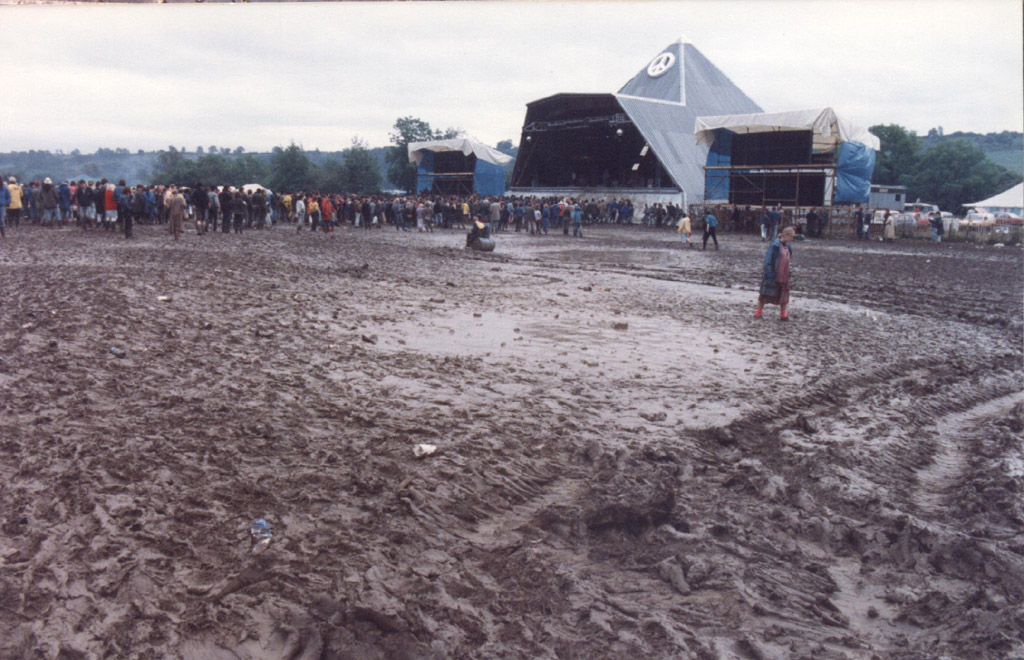
- Iconic Pyramid Stage at the heart of the festival
- Raises millions for charity through volunteer staff
What it is
Glastonbury Festival is a sprawling celebration of music and the performing arts, set on 1,500 acres of farmland near Pilton in Somerset, England. Over five days, it brings together leading pop and rock acts, alongside dance, comedy, theatre, circus, and cabaret. The festival is renowned for its vibrant atmosphere, eclectic performances, and its roots in the counterculture and hippie movements of the 1960s. For many, Glastonbury is more than just a music festival—it's a gathering that reflects ideals of community, creativity, and social change.
Where it comes from
The festival began in 1970 when Michael Eavis, inspired by an open-air Led Zeppelin concert, hosted the first event—then called the Pilton Festival—on his farm. It drew 1,500 people and featured acts like T. Rex. In 1971, the event was renamed Glastonbury Fair and introduced the iconic Pyramid Stage, designed as a replica of the Great Pyramid of Giza. Over the decades, Glastonbury has grown from a small local gathering into a major international event, retaining elements of its original ethos through areas like the Green Fields, which celebrate alternative culture and environmentalism.
How it is celebrated
Festival-goers at Glastonbury experience a packed schedule of music across multiple stages, with headline acts on the Pyramid Stage and thousands of other performers on smaller platforms. The event also features dance, theatre, circus acts, comedy, and cabaret, offering something for every taste. The site transforms into a temporary city, complete with its own infrastructure, food stalls, and themed areas such as the Green Fields, Healing Field, and Stone Circle. Many attendees camp on-site, embracing the communal spirit, and volunteers play a key role in running the festival, helping to raise millions for charities. Rain or shine, the festival's muddy fields and colourful crowds are part of its unique character.



Joining in
To take part in Glastonbury, visitors head to Worthy Farm near Pilton, Somerset, where the main celebrations unfold. Expect a vast, lively site with a mix of music, arts, and cultural experiences. Tickets are highly sought after and must be purchased in advance. Newcomers should be prepared for changing weather and a festival that rewards curiosity—exploring the many stages, themed areas, and spontaneous happenings is part of the adventure.
Sources and attribution
This page is Mela's own summary, written in new words. Its facts are drawn from the Wikipedia article Glastonbury Festival, whose text is available under the CC BY-SA 4.0 licence, and from its Wikidata record (CC0). Each photo is credited to its author beside it. For the full account, read the originals below.
Read more
- Glastonbury Festival on WikipediaEncyclopedia
- Official websiteOfficial site
- Encyclopaedia BritannicaArticle
- More photos on Wikimedia CommonsPhotos
- Wikidata recordOpen data
This page was written with AI assistance from the sources listed above, and checked automatically before publishing. Spotted a mistake? Tell us. Last refreshed 2026-10-02.
 Sports
 Sports
 Spiritual
 Sports
 Arts and film
 Arts and film
 Arts and film
 Arts and film