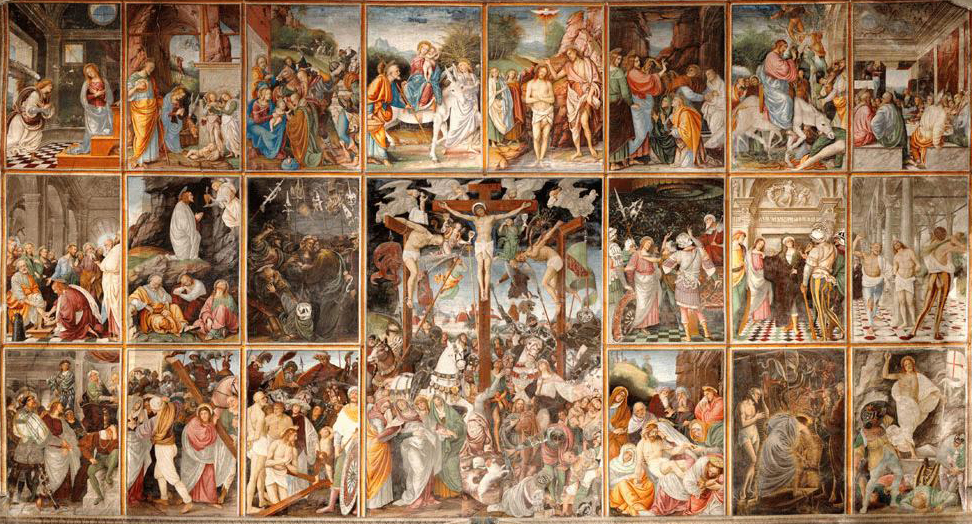
Presentation of Jesus at the Temple
A feast marking Jesus' presentation in the Temple, forty days after Christmas
The Presentation of Jesus at the Temple, also known as Candlemas, is a Christian feast celebrated forty days after Christmas. Observed on 2 February in many Western churches and mid-February in some Eastern traditions, it marks the moment when Mary and Joseph brought the infant Jesus to the Temple in Jerusalem, as described in the Gospel of Luke.
- Celebrated forty days after Christmas, on 2 February in many churches
- Known as Candlemas for its candle-blessing procession
- In Orthodox tradition, called the Meeting of the Lord or Hypapante
- Polish celebrations feature gromnice, candles used to ward off storms
- Marks both Mary's purification and Jesus' presentation in the Temple
What it is
The Presentation of Jesus at the Temple is a significant Christian festival that commemorates the moment when Mary and Joseph brought the infant Jesus to Jerusalem's Temple, forty days after his birth. This act fulfilled Jewish law and marked both Mary's ritual purification and the redemption of the firstborn. For many Christians, the day is a celebration of Jesus being revealed as the light for all people, echoing Simeon's words in the Gospel of Luke. The feast is known by several names—Candlemas, the Feast of the Purification, or the Meeting of the Lord—reflecting its varied traditions and meanings across different churches.
Where it comes from
The origins of the Presentation of Jesus at the Temple are rooted in Jewish law, which required mothers to undergo purification and to present their firstborn sons at the Temple. The Gospel of Luke recounts how Mary and Joseph observed these customs, offering a pair of turtledoves or pigeons as a sacrifice. Over time, Christian communities began to commemorate this event, with the earliest celebrations dating back to at least the fifth century. The feast developed distinct traditions in Western and Eastern Christianity, often reflecting local customs and theological emphases.
How it is celebrated
Celebrations of the Presentation vary across Christian traditions. In Western churches, especially Roman Catholic, Anglican, and Lutheran communities, the day is often called Candlemas, marked by the blessing of beeswax candles and sometimes a procession of light, symbolizing Jesus as the light of the world. In Poland, special candles called gromnice are blessed and used to protect homes during storms. In the Eastern Orthodox Church, the feast is known as the Meeting of the Lord and is one of the twelve Great Feasts, featuring an all-night vigil and the blessing of candles. The liturgy may include readings from the Gospel of Luke and hymns that recall Simeon's prophecy and Anna's praise. The festival is both a celebration of Jesus' early life and a reflection on themes of light, revelation, and fulfillment of prophecy.


Joining in
Visitors can experience the Presentation of Jesus at the Temple in churches across the world, with notable celebrations in countries such as Armenia, Poland, and throughout Western and Eastern Europe. Attending a Candlemas service, you may witness the blessing of candles and processions, hear special hymns, and join in prayers that reflect the festival's themes. In Orthodox communities, the all-night vigil and morning liturgy offer a chance to observe ancient rituals and the communal spirit of the feast. Customs and intensity of observance vary, but the festival's atmosphere is often one of quiet reverence and hope.
Sources and attribution
This page is Mela's own summary, written in new words. Its facts are drawn from the Wikipedia article Presentation of Jesus, whose text is available under the CC BY-SA 4.0 licence, and from its Wikidata record (CC0). Each photo is credited to its author beside it. For the full account, read the originals below.
Read more
- Presentation of Jesus on WikipediaEncyclopedia
- Encyclopaedia BritannicaArticle
- More photos on Wikimedia CommonsPhotos
- Wikidata recordOpen data
This page was written with AI assistance from the sources listed above, and checked automatically before publishing. Spotted a mistake? Tell us. Last refreshed 2026-10-02.
More spiritual festivals
See them all Spiritual
10Feb
Ash Wednesday🇨🇦 Canada and 13 more countries
Spiritual
10Feb
Ash Wednesday🇨🇦 Canada and 13 more countries
 Spiritual
2Feb
Candlemas🇧🇪 Belgium and 13 more countries
Spiritual
2Feb
Candlemas🇧🇪 Belgium and 13 more countries
 Spiritual
7Feb
Maslenitsa🇧🇾 Moscow, Belarus and 2 more countries
Spiritual
7Feb
Maslenitsa🇧🇾 Moscow, Belarus and 2 more countries
 Spiritual
Febvaries
Maha Shivaratri🇮🇳 India and 7 more countries
Spiritual
Febvaries
Maha Shivaratri🇮🇳 India and 7 more countries
 Spiritual
8Feb
Ramadan🇦🇫 Afghanistan and 29 more countries
Spiritual
8Feb
Ramadan🇦🇫 Afghanistan and 29 more countries
 Spiritual
9Feb
Mardi Gras🇫🇷 France and 3 more countries
Spiritual
9Feb
Mardi Gras🇫🇷 France and 3 more countries
 Spiritual
9Feb
Shrove Tuesday🇧🇾 Belarus and 19 more countries
Spiritual
9Feb
Shrove Tuesday🇧🇾 Belarus and 19 more countries
 Spiritual
Febvaries
Setsubun🇯🇵 Tokyo, Japan
Spiritual
Febvaries
Setsubun🇯🇵 Tokyo, Japan