
Thaipusam
A Tamil Hindu festival of devotion and penance for Lord Murugan
Thaipusam is a Tamil Hindu festival held on the full moon in the month of Thai, celebrated by Tamil communities in India, Sri Lanka, Malaysia, Singapore, and across the global diaspora. Marking Murugan's victory over the demon Surapadman, devotees undertake acts of devotion and penance, including carrying burdens and piercing the skin, in vibrant processions at temples and public spaces.
- Devotees carry kavadi, ornate burdens, as acts of penance
- Many pierce their skin, tongue, or cheeks with vel skewers
- Major celebrations at Batu Caves, Malaysia and Palani, India
- Festival marks Murugan's victory over the demon Surapadman
- Observed by Tamil communities worldwide
What it is
Thaipusam is a deeply significant festival for Tamil Hindus, dedicated to Lord Murugan, the deity of youth, power, and virtue. It commemorates Murugan’s triumph over the demon Surapadman, a story that symbolizes the victory of good over evil. The festival is marked by acts of devotion and penance, as devotees seek blessings, fulfill vows, or express gratitude. Central to Thaipusam is the idea of carrying a burden—physical, emotional, or spiritual—as an offering to Murugan, believed to bring relief, healing, or spiritual liberation. For many, it is a time of intense prayer, self-discipline, and community gathering.
Where it comes from
Thaipusam’s roots are found in the Tamil tradition and the legends of Murugan as told in the Kanda Puranam. According to the story, Murugan was created from divine sparks to defeat the asura Surapadman, who had gained immense power through penance. Armed with the vel, a sacred spear given by his mother Parvati, Murugan vanquished the demon, restoring balance and peace. The festival’s name comes from the Tamil month of Thai and the star Pusam, marking the auspicious timing. Over time, Thaipusam spread from South India to regions with Tamil communities, becoming a major event in places like Malaysia, Singapore, and Mauritius.
How it is celebrated
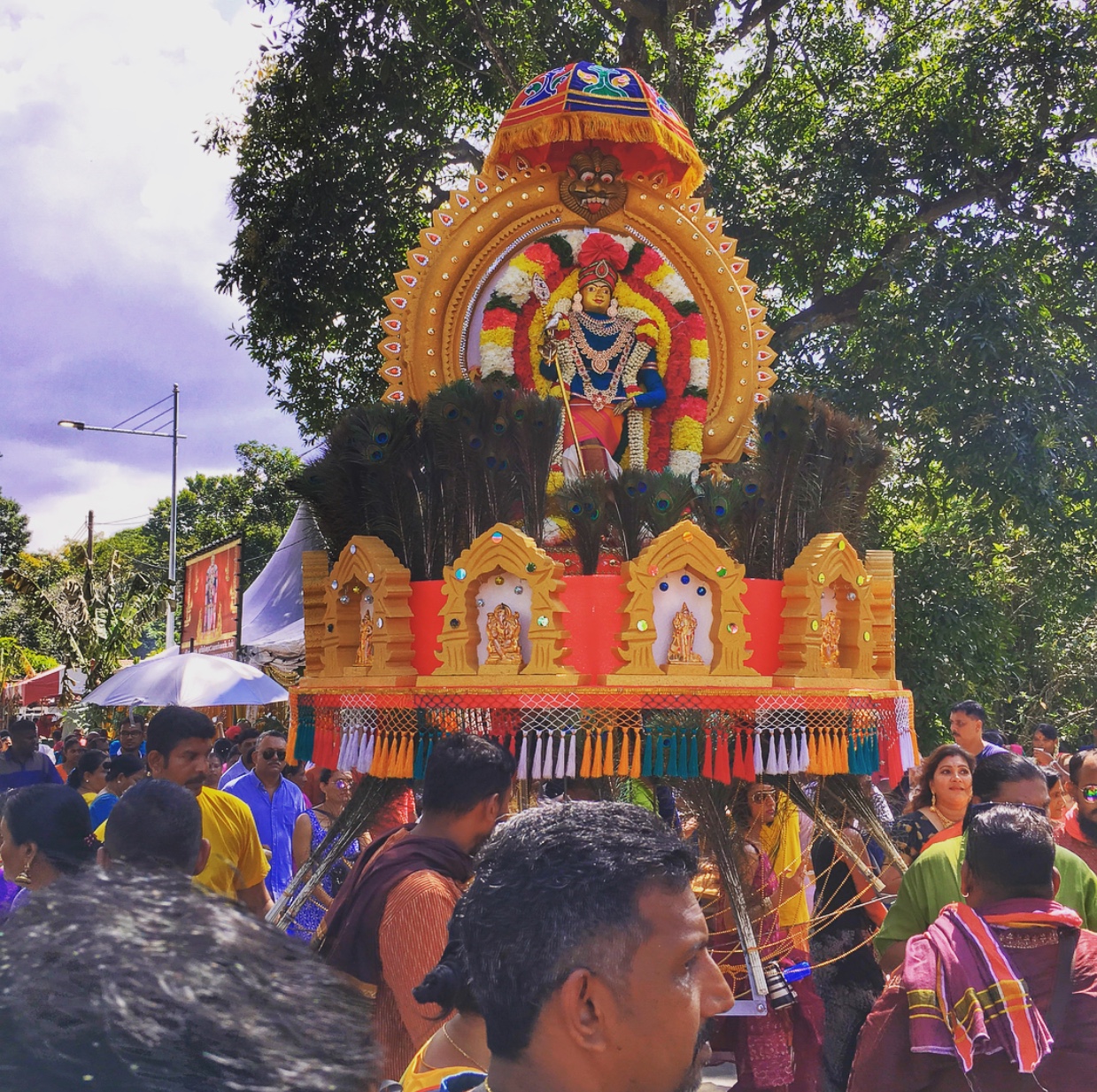
Celebrations of Thaipusam are marked by striking acts of devotion. Many devotees carry kavadi—ornate structures balanced on the shoulders, sometimes attached to the body with hooks or skewers—as a symbolic burden. Some pierce their skin, tongue, or cheeks with vel skewers, while others carry pots of milk or offerings of fruit and flowers. Preparation is important: devotees often fast, follow a vegetarian diet, and maintain celibacy in the days leading up to the festival. Processions, drumming, and chanting create an intense, trance-like atmosphere. In India, major Murugan temples like Palani and Tiruchendur draw vast crowds, while in Malaysia, the Batu Caves host one of the world’s largest Thaipusam gatherings. The festival is both a personal journey and a communal spectacle, with participants and onlookers sharing in the fervor.


Joining in
Visitors are welcome to observe Thaipusam in many countries, especially at major sites such as Batu Caves in Malaysia, Sri Thendayuthapani Temple in Singapore, and Palani in Tamil Nadu, India. Expect large crowds, vibrant processions, and a powerful sense of devotion. While photography is often permitted, it is important to be respectful of worshippers and rituals, particularly during acts of piercing and kavadi bearing. Modest dress and sensitivity to the spiritual atmosphere are advised. The festival is a unique opportunity to witness living tradition and community faith in action.
Sources and attribution
This page is Mela's own summary, written in new words. Its facts are drawn from the Wikipedia article Thaipusam, whose text is available under the CC BY-SA 4.0 licence, and from its Wikidata record (CC0). Each photo is credited to its author beside it. For the full account, read the originals below.
Read more
This page was written with AI assistance from the sources listed above, and checked automatically before publishing. Spotted a mistake? Tell us. Last refreshed 2026-10-02.
More spiritual festivals
See them all Spiritual
10Feb
Ash Wednesday🇨🇦 Canada and 13 more countries
Spiritual
10Feb
Ash Wednesday🇨🇦 Canada and 13 more countries
 Spiritual
2Feb
Candlemas🇧🇪 Belgium and 13 more countries
Spiritual
2Feb
Candlemas🇧🇪 Belgium and 13 more countries
 Spiritual
7Feb
Maslenitsa🇧🇾 Moscow, Belarus and 2 more countries
Spiritual
7Feb
Maslenitsa🇧🇾 Moscow, Belarus and 2 more countries
 Spiritual
Febvaries
Maha Shivaratri🇮🇳 India and 7 more countries
Spiritual
Febvaries
Maha Shivaratri🇮🇳 India and 7 more countries
 Spiritual
8Feb
Ramadan🇦🇫 Afghanistan and 29 more countries
Spiritual
8Feb
Ramadan🇦🇫 Afghanistan and 29 more countries
 Spiritual
9Feb
Mardi Gras🇫🇷 France and 3 more countries
Spiritual
9Feb
Mardi Gras🇫🇷 France and 3 more countries
 Spiritual
2Feb
Presentation of Jesus at the Temple🇦🇲 Armenia and 15 more countries
Spiritual
2Feb
Presentation of Jesus at the Temple🇦🇲 Armenia and 15 more countries
 Spiritual
9Feb
Shrove Tuesday🇧🇾 Belarus and 19 more countries
Spiritual
9Feb
Shrove Tuesday🇧🇾 Belarus and 19 more countries