
Barranquilla Carnival
Four days of music, dance, and parades in Barranquilla before Lent
Barranquilla Carnival is Colombia’s largest folkloric celebration, held in Barranquilla over four days before Lent. The city bursts into life with parades, street dances, and music, drawing locals and visitors alike to join in vibrant festivities recognized by UNESCO as a cultural treasure.
- Declared a UNESCO Masterpiece of Oral and Intangible Heritage in 2003
- Features the Battle of the Flowers parade on the first day
- Cumbia and other Colombian music styles fill the streets
- Ends with the symbolic burial of Joselito Carnaval
- Pre-carnival events include the nocturnal Guacherna parade
What it is
Barranquilla Carnival is a dazzling celebration that transforms the city of Barranquilla into a stage for music, dance, and tradition. For four days before Lent, the city’s usual rhythm gives way to a whirlwind of parades, masquerades, and street parties. Locals and visitors come together to celebrate the region’s diverse heritage, with influences from European, African, and Indigenous cultures. The festival is a proud expression of Barranquilla’s identity, and its slogan—'Those who live it are those who enjoy it'—captures the spirit of participation and joy that defines the event.
Where it comes from
The exact origins of Barranquilla Carnival are unclear, but it is believed to have emerged from a blend of pagan ceremonies, Catholic beliefs, and the rich mix of cultures in the region. The festival’s traditions date back to the 19th century, with roots in celebrations brought by Spanish and Portuguese settlers and shaped by African and Indigenous influences. Key milestones include the appearance of King Momo in 1888, the first Battle of Flowers parade in 1903, and the crowning of the first Carnival Queen in 1918. Over time, the carnival has grown into a symbol of local pride and cultural diversity.
How it is celebrated
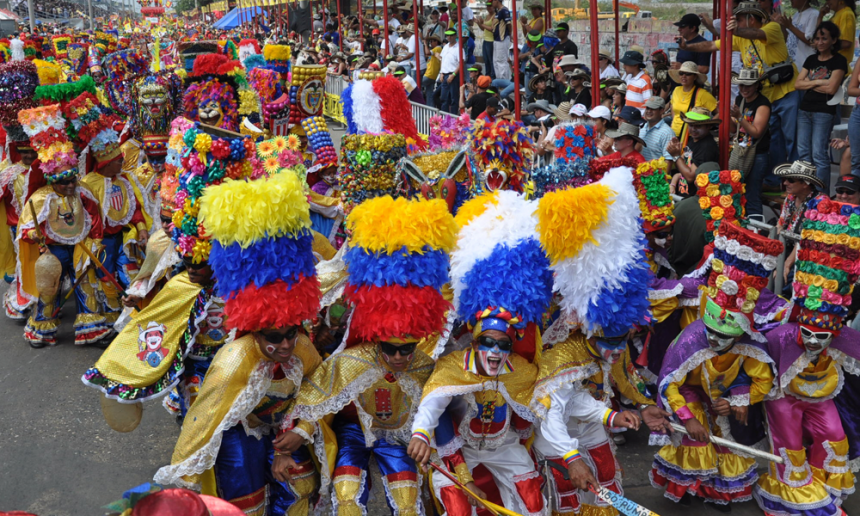
Celebrations begin with pre-carnival events, including the reading of the Carnival Proclamation and the crowning of the Carnival Queen and Momo King. The main festivities start on the Saturday before Ash Wednesday with the Battle of the Flowers, a vibrant parade featuring floats, dancers, and musicians. Sunday and Monday bring the Great Parade and the Orchestra Festival, showcasing a range of Caribbean and Latin music. Traditional dances like cumbia, paloteo, and Congo are performed, accompanied by drums and wind instruments. The carnival concludes on Tuesday with the symbolic burial of Joselito Carnaval, marking the end of the revelry. Throughout, the city is alive with costumes, music, and communal joy.


Joining in
To experience Barranquilla Carnival, head to Barranquilla in northern Colombia during the four days before Lent. The main events take place on the city’s streets, especially along parade routes where locals and visitors gather to watch floats, dancers, and musicians. Expect a festive atmosphere with crowds, music, and colorful costumes. As a newcomer, you can join public celebrations, enjoy street food, and witness the city’s unique blend of traditions. It’s a time when everyone is welcome to take part in the joy and spectacle of one of the world’s great carnivals.
Sources and attribution
This page is Mela's own summary, written in new words. Its facts are drawn from the Wikipedia article Barranquilla Carnival, whose text is available under the CC BY-SA 4.0 licence, and from its Wikidata record (CC0). Each photo is credited to its author beside it. For the full account, read the originals below.
Read more
- Barranquilla Carnival on WikipediaEncyclopedia
- Official websiteOfficial site
- UNESCO Intangible Cultural HeritageArticle
- More photos on Wikimedia CommonsPhotos
- Wikidata recordOpen data
This page was written with AI assistance from the sources listed above, and checked automatically before publishing. Spotted a mistake? Tell us. Last refreshed 2026-10-02.
More from Colombia
All festivals in Colombia Cultural
2Jan
Blacks and Whites' Carnival🇨🇴 Colombia and 3 more countries
Cultural
2Jan
Blacks and Whites' Carnival🇨🇴 Colombia and 3 more countries
 Cultural
Aprvaries
Moors and Christians Festival🇪🇸 Spain and 5 more countries
Cultural
Aprvaries
Moors and Christians Festival🇪🇸 Spain and 5 more countries
 Arts and film
Marvaries
Cartagena International Film Festival🇨🇴 Cartagena, Colombia
Arts and film
Marvaries
Cartagena International Film Festival🇨🇴 Cartagena, Colombia
 Music
15May
Electric Daisy Carnival🇲🇽 Mexico and 5 more countries
Music
15May
Electric Daisy Carnival🇲🇽 Mexico and 5 more countries
 Cultural
 Cultural
 Cultural
 Cultural