
Christmas market
Open-air markets bringing festive cheer to cities during Advent
A Christmas market is a festive street market held during the four weeks of Advent, especially in Germany, Austria, Switzerland, and across Europe. These markets fill city squares with stalls selling seasonal foods, crafts, and gifts, accompanied by music and local traditions.
- Dresden's Striezelmarkt dates to 1434
- Vienna hosts 20 Christmas markets each year
- Cologne's market draws 4 million visitors
- Traditional foods include Lebkuchen and Glühwein
- Nuremberg welcomes the Christkind at its opening
What it is
Christmas markets are open-air gatherings that transform city squares and town centers into festive hubs during the weeks leading up to Christmas. Stalls brim with handmade ornaments, winter treats, and warming drinks, while music and local performances fill the air. For many, visiting the market marks the start of the holiday season, offering a chance to connect with neighbors, enjoy traditional foods, and find unique gifts. The markets are cherished for their atmosphere—twinkling lights, the scent of spices and roasting nuts, and the sense of anticipation that builds as Christmas approaches.
Where it comes from
The tradition of Christmas markets began in the Late Middle Ages in German-speaking Europe and the former Holy Roman Empire. Early markets, such as Vienna's 'December market' in 1298 and Munich's Saint Nicholas market in 1310, provided townsfolk with winter provisions and gifts. Over time, these gatherings evolved into festive events focused on Christmas, with Dresden's Striezelmarkt (first held in 1434) recognized as one of the earliest true Christmas markets. The custom spread across Europe, adapting to local cultures and becoming a beloved Advent tradition.
How it is celebrated
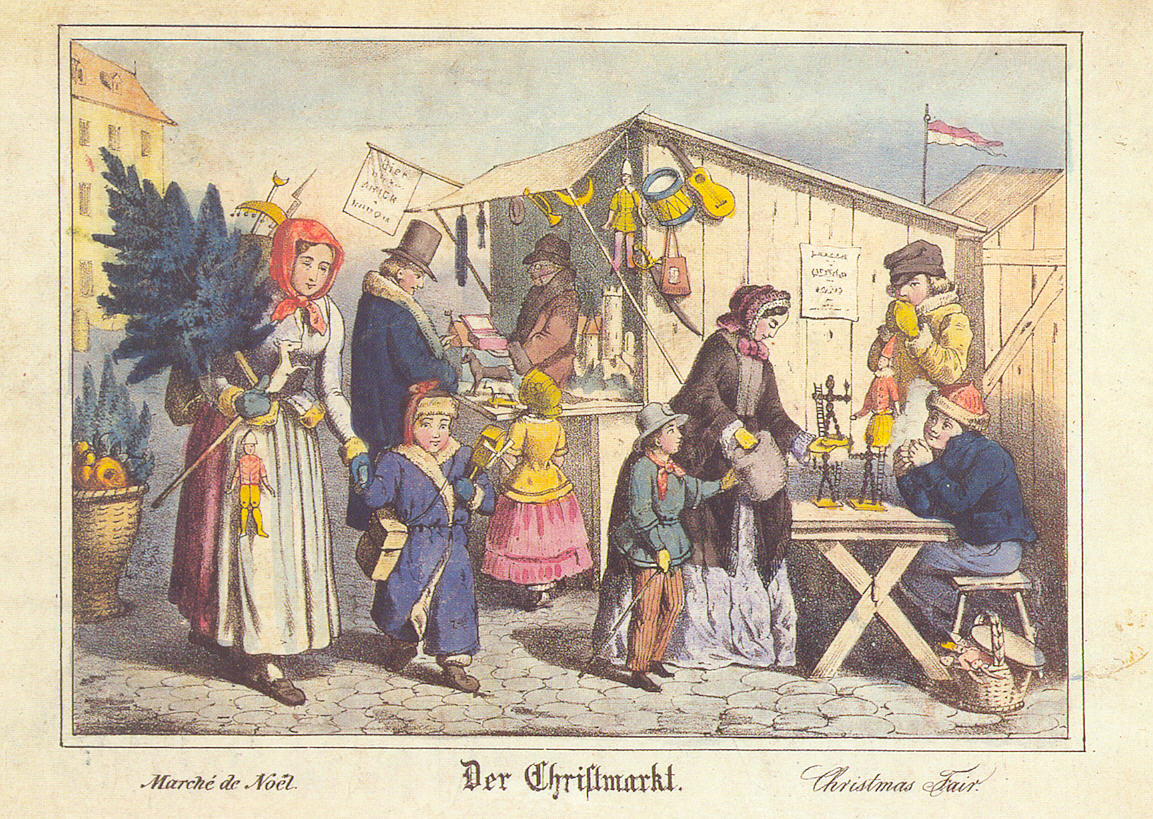
At Christmas markets, visitors wander among rows of wooden stalls offering regional specialties like Lebkuchen (gingerbread), candied almonds, Bratwurst, and mulled wine known as Glühwein. Artisans sell hand-carved nutcrackers, ornaments, and nativity figures. In Austria, treats such as Kinderpunsch and Baumstriezel are popular, while in Germany, the scent of roasted chestnuts and spiced bread fills the air. Many markets feature live music, choirs, and performances, and in places like Nuremberg, the Christkind—a symbolic figure—makes an appearance. Some markets add attractions like ice rinks or Ferris wheels, creating a lively and welcoming atmosphere for all ages.



Joining in
To experience a Christmas market, head to city centers in countries like Germany, Austria, France, and Italy from late November through December. Vienna, Nuremberg, Dresden, Strasbourg, and Cologne are especially known for their grand markets, each with its own local flavor. Expect crowds, festive lights, and the chance to sample traditional foods and drinks. Dress warmly, as most markets are outdoors and can be chilly, and bring cash for small purchases at the stalls.
Sources and attribution
This page is Mela's own summary, written in new words. Its facts are drawn from the Wikipedia article Christmas market, whose text is available under the CC BY-SA 4.0 licence, and from its Wikidata record (CC0). Each photo is credited to its author beside it. For the full account, read the originals below.
Read more
- Christmas market on WikipediaEncyclopedia
- Christmas markets travel guide on WikivoyageTravel guide
- More photos on Wikimedia CommonsPhotos
- Wikidata recordOpen data
This page was written with AI assistance from the sources listed above, and checked automatically before publishing. Spotted a mistake? Tell us. Last refreshed 2026-10-02.
More cultural celebrations
See them all Cultural
26Nov
Thanksgiving🇨🇦 Canada and 3 more countriesIn 8 weeks
Cultural
26Nov
Thanksgiving🇨🇦 Canada and 3 more countriesIn 8 weeks
 Cultural
27Nov
Black Friday🇦🇱 Albania and 29 more countriesIn 8 weeks
Cultural
27Nov
Black Friday🇦🇱 Albania and 29 more countriesIn 8 weeks
 Cultural
1Nov
Day of the Dead🇲🇽 Mexico and 13 more countriesIn 4 weeks
Cultural
1Nov
Day of the Dead🇲🇽 Mexico and 13 more countriesIn 4 weeks
 Cultural
Novvaries
Monkey Buffet Festival🇹🇭 Lopburi, Thailand
Cultural
Novvaries
Monkey Buffet Festival🇹🇭 Lopburi, Thailand
 Cultural
Novvaries
Sinterklaas🇧🇪 Belgium and 5 more countries
Cultural
Novvaries
Sinterklaas🇧🇪 Belgium and 5 more countries
 Cultural
11Nov
Singles' Day🇨🇳 China and 6 more countriesIn 6 weeks
Cultural
11Nov
Singles' Day🇨🇳 China and 6 more countriesIn 6 weeks
 Cultural
27Nov
Buy Nothing Day🇨🇦 Canada and 8 more countriesIn 8 weeks
Cultural
27Nov
Buy Nothing Day🇨🇦 Canada and 8 more countriesIn 8 weeks
 Cultural
2Nov
Karatsu Kunchi🇯🇵 Karatsu, JapanIn 4 weeks
Cultural
2Nov
Karatsu Kunchi🇯🇵 Karatsu, JapanIn 4 weeks