
Sinterklaas is a festive tradition celebrated mainly in the Netherlands and Belgium, honouring Saint Nicholas, the patron saint of children. The celebration begins with Sinterklaas's arrival from Spain in mid-November and culminates in gift-giving on 5 December in the Netherlands and 6 December in Belgium.
- Sinterklaas arrives by steamboat from Spain in mid-November
- Gift-giving happens on 5 December in the Netherlands, 6 December in Belgium
- Children leave shoes out for small presents and treats
- Sinterklaas is accompanied by helpers called Zwarte Piet
- The tradition inspired the modern Santa Claus
What it is
Sinterklaas is a cherished festival in the Netherlands and Belgium, centred on the legendary figure of Saint Nicholas. He is depicted as a dignified bishop in red robes, arriving each year from Spain to bring joy and gifts to children. The celebration blends folklore and community, with Sinterklaas seen as a wise, kind figure who rewards good behaviour. The festival is marked by anticipation, songs, and the exchange of small presents, and it holds deep cultural significance for families, bringing people of all backgrounds together in the spirit of generosity and tradition.
Where it comes from
The Sinterklaas tradition is rooted in the veneration of Saint Nicholas, a 4th-century Greek bishop known for his generosity, especially towards children. Over time, his story merged with local customs in the Low Countries, evolving into the modern Sinterklaas festival. The connection to Spain likely developed due to the historical transport of Saint Nicholas’s relics and the association with oranges, a prized treat once imported from Spain. Sinterklaas is also considered a source of inspiration for the figure of Santa Claus, who shares many similarities in appearance and tradition.
How it is celebrated
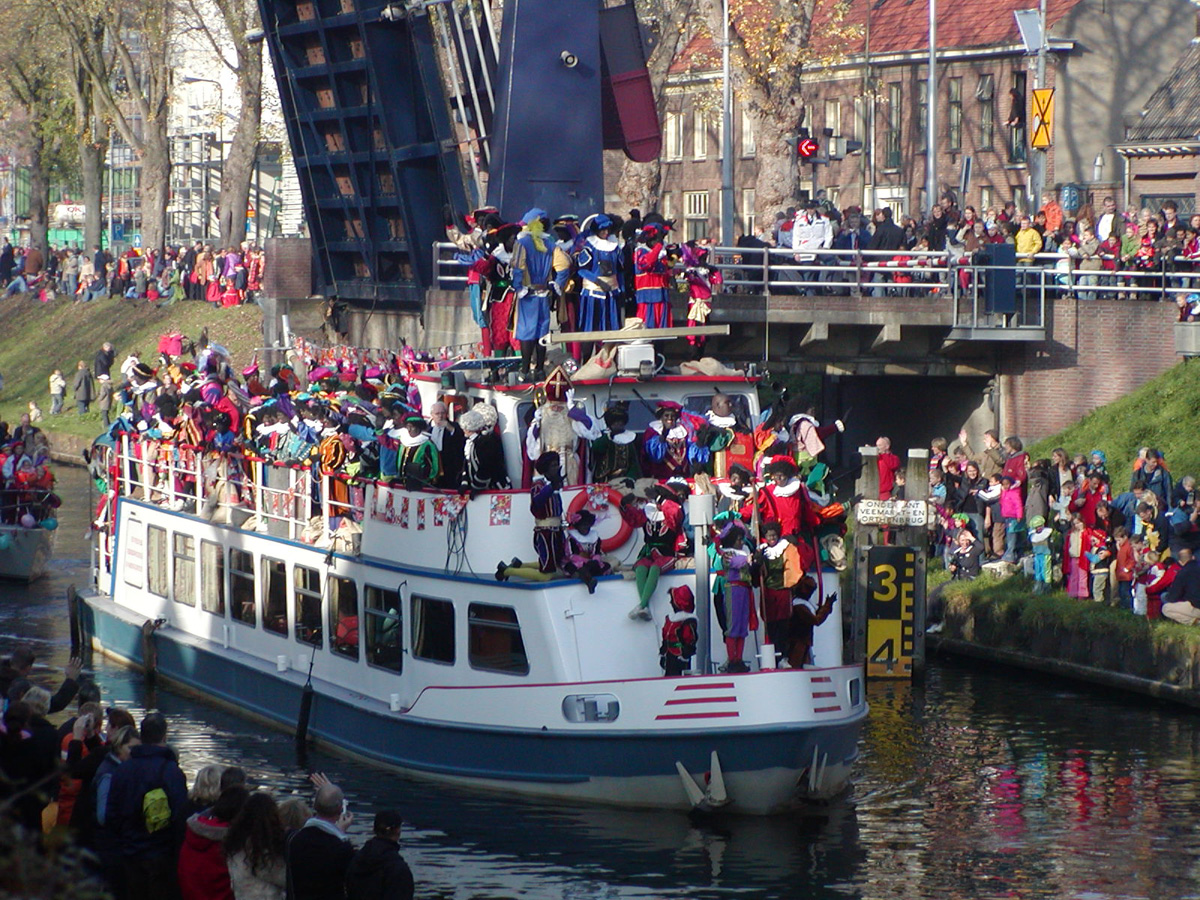
Festivities begin in mid-November with Sinterklaas’s grand arrival by steamboat, broadcast live and celebrated in a different Dutch port each year, and always in Antwerp in Belgium. Sinterklaas parades through the streets on his white horse, accompanied by helpers known as Zwarte Piet, who toss sweets and spiced cookies (kruidnoten or pepernoten) to the crowds. In the weeks leading up to 5 December, Sinterklaas visits schools, hospitals, and public places, and children leave their shoes out at night, hoping for small gifts or treats. The main celebration in the Netherlands is on Saint Nicholas’ Eve (5 December), when families exchange gifts and poems, while in Belgium, the focus is on the morning of 6 December. The festival has adapted over time, with changes to the appearance of Zwarte Piet reflecting ongoing social discussions.



Joining in
Visitors can experience Sinterklaas in cities and towns across the Netherlands and Belgium, with the largest public arrivals and parades in major ports and in Antwerp. Expect lively crowds, traditional songs, and the joyful distribution of sweets. Shops and public spaces are decorated, and the atmosphere is festive and welcoming. While the main gift-giving is a family affair, the public events offer a unique glimpse into Dutch and Belgian culture, making it easy for newcomers to join in the excitement and learn the customs.
Sources and attribution
This page is Mela's own summary, written in new words. Its facts are drawn from the Wikipedia article Sinterklaas, whose text is available under the CC BY-SA 4.0 licence, and from its Wikidata record (CC0). Each photo is credited to its author beside it. For the full account, read the originals below.
Read more
This page was written with AI assistance from the sources listed above, and checked automatically before publishing. Spotted a mistake? Tell us. Last refreshed 2026-10-02.
 Spiritual
 Music
Music Music
Music Sports
 Cultural
 Cultural
 Cultural
 Cultural