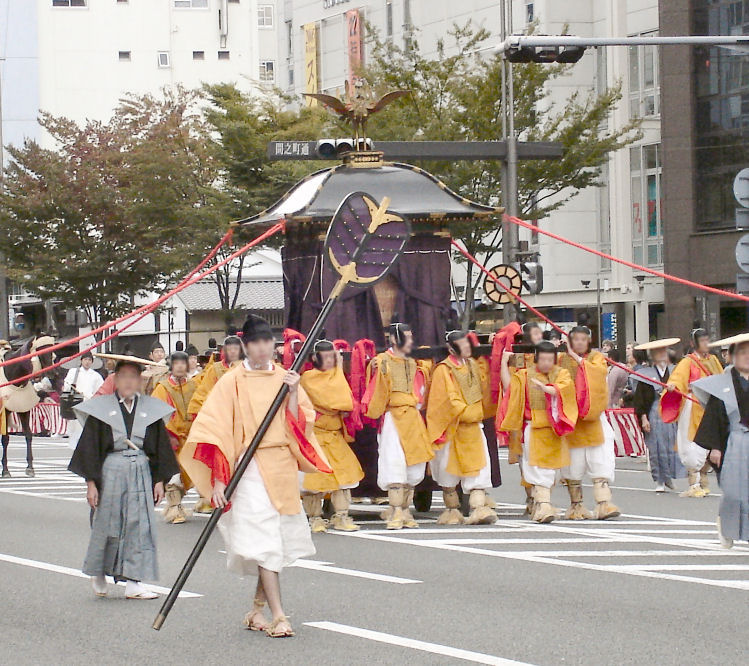
Jidai Matsuri, or the Festival of the Ages, is held every 22 October in Kyoto, Japan. This major cultural event features a grand parade of over 2,000 participants in period costumes, celebrating Kyoto’s rich history from its founding to the Meiji era.
- Over 2,000 participants parade in historical costumes
- Held annually on 22 October in Kyoto
- Procession covers two kilometers from the Imperial Palace to Heian Shrine
- Features mikoshi honoring Emperors Kanmu and Kōmei
- Ends with traditional music and ceremonies at Heian Shrine
What it is
Jidai Matsuri is one of Kyoto’s most celebrated festivals, bringing the city’s long and storied past to life. Every year, thousands gather to watch a vibrant procession of people dressed in authentic costumes from various eras of Japanese history. The festival is a living tribute to Kyoto’s role as the imperial capital and its enduring cultural legacy, with participants representing figures from samurai and military leaders to common townsfolk and court ladies. For locals, it is a proud display of heritage and a way to honor the emperors and eras that shaped the city.
Where it comes from
The festival began in 1895, marking the 1100th anniversary of the founding of Heian-kyō, the former name of Kyoto. Its creation was a response to the Meiji Restoration, when the capital moved from Kyoto to Tokyo, leaving many in Kyoto concerned about their city’s future significance. To commemorate Kyoto’s history and reaffirm its cultural importance, the city built the Heian Shrine to honor Emperor Kanmu, who founded Heian-kyō. Later, Emperor Kōmei was also honored for his role in unifying Japan and maintaining Kyoto’s status during times of change.
How it is celebrated
Celebrations start in the morning with the appearance of mikoshi, portable shrines representing Emperors Kanmu and Kōmei, at the Kyoto Imperial Palace. In the afternoon, a five-hour parade stretches for two kilometers through the city. Around 2,000 participants don meticulously crafted costumes from different historical periods, including samurai, military officials, townspeople, and noble women in elaborate jūnihitoe robes. The parade is accompanied by a military band playing gagaku, traditional court music. The procession concludes at the Heian Shrine, where the community gathers to pay respects and celebrate Kyoto’s enduring spirit.


Joining in
Visitors can join the festivities by finding a spot along the parade route, which runs from the Kyoto Imperial Palace to the Heian Shrine. Expect large crowds and a festive, respectful atmosphere as locals and tourists alike admire the detailed costumes and historical reenactments. Arriving early ensures a good view, and the event offers a unique chance to witness Kyoto’s history unfold in a single afternoon. The festival is open to all, and no special arrangements are needed to enjoy the spectacle.
Sources and attribution
This page is Mela's own summary, written in new words. Its facts are drawn from the Wikipedia article Jidai Matsuri, whose text is available under the CC BY-SA 4.0 licence, and from its Wikidata record (CC0). Each photo is credited to its author beside it. For the full account, read the originals below.
Read more
- Jidai Matsuri on WikipediaEncyclopedia
- Official websiteOfficial site
- Encyclopaedia BritannicaArticle
- More photos on Wikimedia CommonsPhotos
- Wikidata recordOpen data
This page was written with AI assistance from the sources listed above, and checked automatically before publishing. Spotted a mistake? Tell us. Last refreshed 2026-10-02.
 Cultural
 Spiritual
 Spiritual
 Sports
 Cultural
 Cultural
 Cultural
 Cultural