
Kupala Night
A Slavic midsummer celebration of fire, water, and ancient rituals
Kupala Night is a major folk festival in Belarus, Russia, and Ukraine, marking the summer solstice. Celebrated on 6–7 July in Belarus and Russia, and late June or early July in Ukraine, it features rituals with fire, water, and herbs, blending ancient traditions with Christian influences.
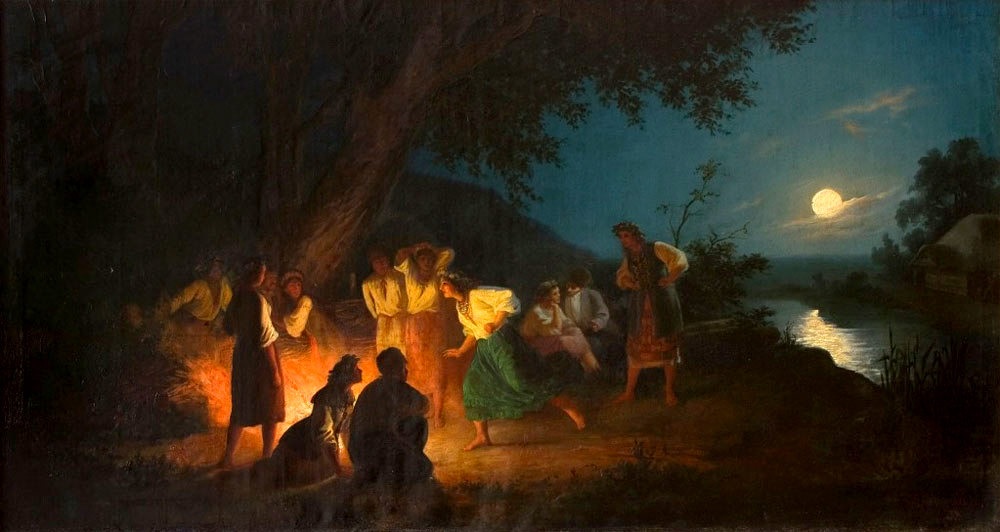
- Bonfires are lit and people leap over the flames for luck
- Flower wreaths are floated on rivers to tell fortunes
- Bathing in natural waters is believed to purify and protect
- Herbs and flowers are gathered and used for decorations
- Matchmaking rituals and playful games are central to the night
What it is
Kupala Night is a vibrant midsummer festival celebrated by Slavic communities, especially in Belarus, Russia, and Ukraine. The holiday centers on the themes of nature, purification, and the mystical powers believed to be strongest at the height of summer. People gather near rivers, lakes, or on hills to mark the shortest night of the year with rituals that honor both water and fire. The festival is especially meaningful for young people, who take part in age-old customs that are said to bring luck, love, and protection. Kupala Night is a living link to the region’s pre-Christian past, now intertwined with the Christian feast of St. John the Baptist.
Where it comes from
Kupala Night has roots in ancient Slavic traditions that honored the summer solstice, later blending with Christian celebrations of St. John the Baptist. The festival’s name comes from a Proto-Slavic word meaning 'to bathe,' reflecting the importance of water in its rituals. Historical records show the holiday was known by various names across Slavic languages and regions, and its customs may date back to at least the 11th century. While some sources once claimed the festival was dedicated to a deity named Kupala, modern researchers dispute this, viewing the celebration as a fusion of pagan and Christian elements. Many rituals, such as lighting fires by friction, point to its deep antiquity.
How it is celebrated
Kupala Night is marked by a series of lively and symbolic rituals. People gather herbs and flowers to decorate themselves, their animals, and their homes, believing these plants hold special power on this night. Bathing in rivers or lakes, or dousing oneself with water, is a central act, symbolizing purification and renewal. As dusk falls, bonfires are lit—sometimes using the traditional method of rubbing wood together—and people leap over the flames, a gesture thought to bring health and ward off misfortune. Wreaths made of flowers are set afloat on the water, and their movement is watched for omens, especially about love and marriage. Singing, dancing, and playful matchmaking games fill the night, and in some places, old household items are burned in the fire. Customs also include searching for the mythical fern flower, said to bring happiness to the finder.


Joining in
To experience Kupala Night, head to rural areas or riverbanks in Belarus, Russia, or Ukraine, where the main festivities take place. Visitors can expect an atmosphere filled with music, laughter, and the glow of bonfires. While the rituals are rooted in local tradition, newcomers are often welcome to join in singing, dancing, and even jumping over the fire. It’s a unique chance to witness and participate in customs that have been passed down for centuries, especially in villages where the festival’s most ancient forms are preserved. Be prepared for a night outdoors, surrounded by nature and community spirit.
Sources and attribution
This page is Mela's own summary, written in new words. Its facts are drawn from the Wikipedia article Kupala Night, whose text is available under the CC BY-SA 4.0 licence, and from its Wikidata record (CC0). Each photo is credited to its author beside it. For the full account, read the originals below.
Read more
This page was written with AI assistance from the sources listed above, and checked automatically before publishing. Spotted a mistake? Tell us. Last refreshed 2026-10-03.
 Spiritual
 Seasonal
 National days
 Spiritual
 Seasonal
 Seasonal
 Seasonal
 Seasonal