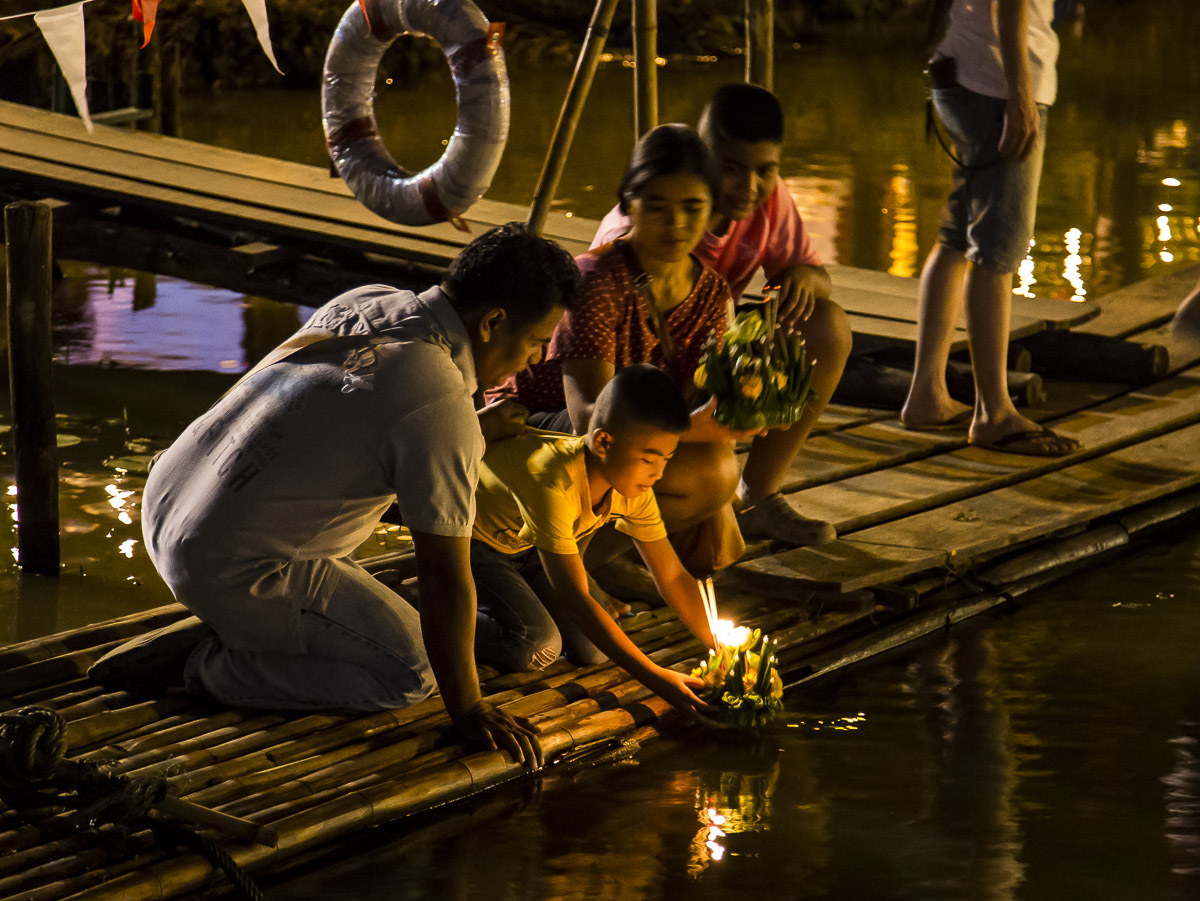
Loy Krathong is a Thai festival held across Thailand and neighboring regions on the full moon of the 12th Thai lunar month, usually in November. People gather by rivers, lakes, and ponds to float decorated baskets, expressing gratitude to the water goddess and symbolically releasing negativity.
- Krathongs are floated on rivers to honor the water goddess
- The festival is held on the full moon of the 12th Thai lunar month
- Chiang Mai celebrates Loy Krathong over three days
- Beauty contests and fireworks are common features
- Traditional krathongs are made from banana trunks or bread
What it is
Loy Krathong is a cherished festival in Thailand, marked by the sight of thousands of candle-lit baskets drifting on waterways. The name means 'to float a ritual vessel,' and the festival centers on launching krathongs—small, ornate floats made from banana trunks or bread—into rivers and ponds. For many, this act is a way to thank the Goddess of Water, Phra Mae Khongkha, and to ask forgiveness for any harm done to the waterways. The festival is also seen as a time to let go of anger, grudges, and misfortune, with the gentle movement of the krathong carrying away past troubles.
Where it comes from
Loy Krathong’s roots reach back to ancient water and moon rites practiced in Southeast Asia, with influences from Hindu traditions such as Diwali. The earliest known depiction of a similar ritual appears on a 12th-century Cambodian temple, showing royal women floating offerings. While a popular legend links the festival to a Sukhothai court lady named Nopphamat, historians have shown this story was created later to give the festival a Thai origin. In reality, Loy Krathong blends Khmer-Brahminical customs and local water worship, and only became a widespread Thai tradition in the mid-20th century, encouraged by nationalism and tourism.
How it is celebrated
On the night of the full moon, people craft krathongs—small floats traditionally made from banana tree trunks, banana leaves, and flowers, now sometimes bread for environmental reasons. Each krathong is adorned with incense sticks, a candle, and sometimes a coin. As dusk falls, families and friends gather by rivers, canals, or ponds to release their krathongs, making wishes or prayers as they watch them drift away. Some add nail or hair clippings to symbolize letting go of past negativity. The festival is lively, with fireworks, beauty contests called 'Nopphamat Queen Contests,' and competitions for the most beautiful krathong. In Chiang Mai, celebrations stretch over three days, blending with the local Yi Peng lantern festival.


Joining in
To experience Loy Krathong, head to any riverside city or town in Thailand, with Chiang Mai and Bangkok offering especially grand festivities. Visitors are welcome to join locals in crafting and floating krathongs, which can be bought at markets or made by hand. Expect crowds, music, and a warm, communal atmosphere as people gather by the water. In Chiang Mai, the festival coincides with the release of sky lanterns, creating a magical scene of lights both on the river and in the sky.
Sources and attribution
This page is Mela's own summary, written in new words. Its facts are drawn from the Wikipedia article Loy Krathong, whose text is available under the CC BY-SA 4.0 licence, and from its Wikidata record (CC0). Each photo is credited to its author beside it. For the full account, read the originals below.
Read more
This page was written with AI assistance from the sources listed above, and checked automatically before publishing. Spotted a mistake? Tell us. Last refreshed 2026-10-03.
 Spiritual
 Spiritual
 Spiritual
 Cultural
 Spiritual
 Spiritual
 Spiritual
 Spiritual