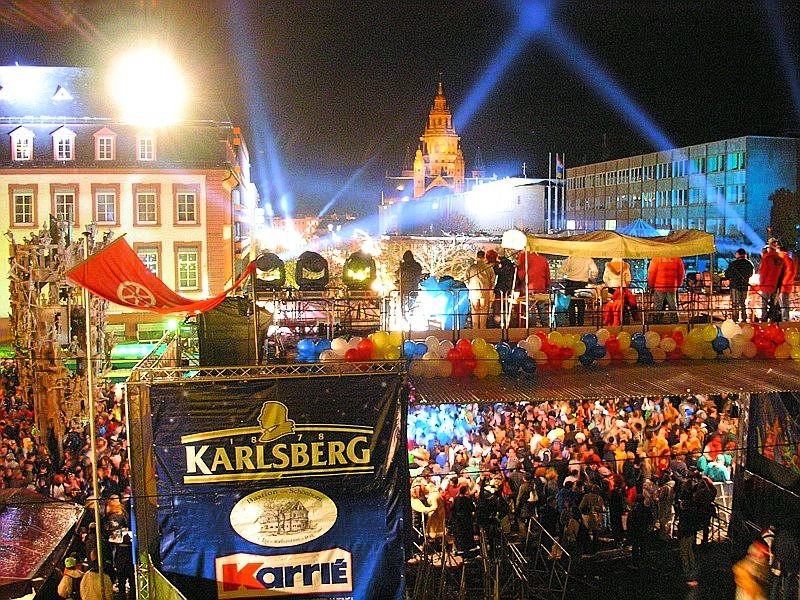
Mainz Carnival
A citywide carnival of satire, parades, and tradition in Mainz, Germany
The Mainz Carnival, or Mainzer Fastnacht, is a months-long celebration in Mainz, Germany, beginning on 11 November and culminating in the days before Ash Wednesday. Known for its vibrant parades, satirical humor, and elaborate costumes, it is one of Germany's largest and most distinctive carnival events.
- Begins each year on 11 November at 11:11
- Mainzer Rosenmontagszug parade is nationally broadcast
- Satirical floats and political humor are central features
- Costumed guards parody historical military uniforms
- Celebrations peak in the days before Ash Wednesday
What it is
Mainz Carnival is a citywide celebration that fills Mainz with color, music, and laughter from November through to the days before Lent. It is a time when the city’s streets come alive with parades, costumes, and a playful spirit. What sets Mainz Carnival apart is its tradition of sharp political and literary humor, woven into speeches, floats, and performances. The festival is a cherished part of local identity, blending centuries-old customs with a lively critique of the times. For many in Mainz, it is both a joyful escape and a way to reflect on society through wit and satire.
Where it comes from
The roots of Mainz Carnival trace back to medieval Christian traditions marking the days before Lent, with the earliest records from the 13th and 14th centuries. Originally a time for masquerade, feasting, and revelry, it evolved through the centuries as both a popular and courtly celebration. In the 19th century, the carnival took on a more organized form, influenced by reforms in nearby Cologne and shaped by local middle-class societies. Political satire became central, especially during periods of foreign occupation and social change, making the festival a unique blend of tradition and commentary.
How it is celebrated
Celebrations begin on 11 November at 11:11, but the real crescendo comes in the days before Ash Wednesday, when Mainz erupts in parades, balls, and street festivities. The highlight is the Mainzer Rosenmontagszug, a grand parade featuring costumed guards in uniforms parodying historical military dress, elaborate floats, and satirical displays lampooning current events. Clubs and societies meet throughout the season to plan performances and events, many of which feature biting political humor and literary wit. The atmosphere is informal and inclusive, with participants and onlookers alike donning costumes, sharing food and drink, and joining in the songs and laughter that fill the city.


Joining in
Visitors to Mainz during carnival can expect a warm welcome and a city transformed by festivity. The main events center around the old town, especially during the final week before Lent, when parades and street parties draw crowds from across Germany. It’s easy to join in—many locals and guests dress up, and the informal spirit means anyone can become part of the fun, even joining the parade for a stretch. Expect lively crowds, clever satire, and a sense of shared celebration that sweeps up newcomers and regulars alike.
Sources and attribution
This page is Mela's own summary, written in new words. Its facts are drawn from the Wikipedia article Mainz carnival, whose text is available under the CC BY-SA 4.0 licence, and from its Wikidata record (CC0). Each photo is credited to its author beside it. For the full account, read the originals below.
Read more
- Mainz carnival on WikipediaEncyclopedia
- Official websiteOfficial site
- More photos on Wikimedia CommonsPhotos
- Wikidata recordOpen data
This page was written with AI assistance from the sources listed above, and checked automatically before publishing. Spotted a mistake? Tell us. Last refreshed 2026-10-02.
 Arts and film
 Spiritual
 Spiritual
 Sports
 Cultural
 Cultural
 Cultural
 Cultural