
National Day of Catalonia
Catalonia remembers its lost freedoms and honors its defenders on 11 September.
The National Day of Catalonia, or Diada, is held every 11 September across Catalonia, Spain. It commemorates the fall of Barcelona in 1714 and the loss of Catalan institutions, marked by public ceremonies, floral tributes, and large gatherings.
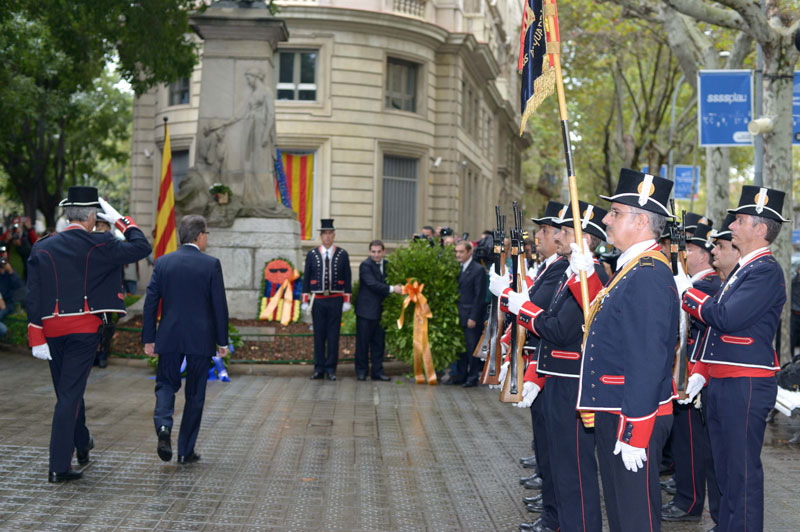
- Floral offerings at monuments to Catalan defenders
- Main ceremonies held in Barcelona at Rafael Casanova's monument
- Large pro-independence demonstrations in recent years
- Widespread display of Catalan flags and patriotic songs
- Public holiday across Catalonia
What it is
The National Day of Catalonia, known locally as the Diada, is a public holiday that stands as a symbol of Catalan identity and resilience. Each year on 11 September, people across Catalonia gather to remember the fall of Barcelona in 1714, which marked the end of Catalan self-government and the suppression of its institutions. For many, the day is both a solemn remembrance of lost freedoms and a celebration of Catalan culture and aspirations. It is a time when the community comes together to honor those who defended the city and to reflect on the region’s history and hopes for the future.
Where it comes from
The Diada traces its origins to the War of the Spanish Succession. After most allied forces left Spain, Catalonia chose to continue fighting to defend its laws and institutions. On 11 September 1714, after a prolonged siege, Barcelona fell to the combined Spanish and French armies. The subsequent abolition of Catalonia’s institutions marked the end of its separate status. The first public commemoration was held in 1886, and the tradition grew, though it was banned during periods of dictatorship. The holiday was celebrated clandestinely until it was officially reinstated in 1980 after Spain’s return to democracy.
How it is celebrated
On the Diada, Catalan organizations, political parties, and citizens lay floral offerings at monuments dedicated to figures like Rafael Casanova and General Moragues, who led the city’s defense. Many gather at the Fossar de les Moreres in Barcelona to honor those who died in the siege. The day is marked by the display of Catalan flags (senyeres and estelades), patriotic songs, speeches, and cultural events throughout towns and villages. In recent years, large pro-independence demonstrations have become a prominent feature, reflecting ongoing political aspirations. The atmosphere is both reflective and spirited, blending remembrance with calls for self-determination.


Joining in
If you visit Catalonia on 11 September, expect to see streets and squares filled with people waving Catalan flags and participating in ceremonies. The main events take place in Barcelona, especially at the monuments of Rafael Casanova and the Fossar de les Moreres, but celebrations and demonstrations occur in towns across the region. As a visitor, you can observe the floral tributes, join in public gatherings, and experience the vibrant sense of community and history that defines the day.
Sources and attribution
This page is Mela's own summary, written in new words. Its facts are drawn from the Wikipedia article National Day of Catalonia, whose text is available under the CC BY-SA 4.0 licence, and from its Wikidata record (CC0). Each photo is credited to its author beside it. For the full account, read the originals below.
Read more
- National Day of Catalonia on WikipediaEncyclopedia
- More photos on Wikimedia CommonsPhotos
- Wikidata recordOpen data
This page was written with AI assistance from the sources listed above, and checked automatically before publishing. Spotted a mistake? Tell us. Last refreshed 2026-10-02.
 Spiritual
 Sports
 Cultural
 Spiritual
 National days
 National days
 National days
 National days