
The Feast of the Immaculate Conception is a major Catholic celebration held on December 8, marking the belief that the Virgin Mary was conceived without original sin. Observed by the Catholic Church and some Eastern Christian communities, it is a day of prayer and reverence in countries such as Spain, France, Ethiopia, and Eritrea.
- Celebrated on December 8 in the Catholic Church
- Honours Mary's conception without original sin
- Observed in Spain, France, Ethiopia, and Eritrea
- Marked by special Masses and Marian prayers
- Iconography features Mary with a crescent moon and stars
What it is
The Feast of the Immaculate Conception celebrates the Catholic doctrine that Mary, mother of Jesus, was preserved from original sin from the first moment of her existence. This belief holds a special place in Catholic devotion, reflecting the idea that Mary was prepared by God to be a pure vessel for the birth of Christ. For many Catholics, the day is an opportunity to reflect on Mary's unique role in salvation history and her example of holiness. The feast is marked as a holy day of obligation in many countries, drawing the faithful to gather in churches for special liturgies and prayers.
Where it comes from
The origins of the feast trace back to the Eastern Church in the 7th century, with celebrations spreading to England by the 11th century and then across Europe. The doctrine itself was debated for centuries among theologians, with the official dogma proclaimed by Pope Pius IX in 1854. The feast’s name and meaning evolved over time, shaped by popular devotion and theological discussion. In the 16th and 17th centuries, devotion to the Immaculate Conception flourished in Spain and France, leading to its eventual recognition as a central Marian feast.
How it is celebrated
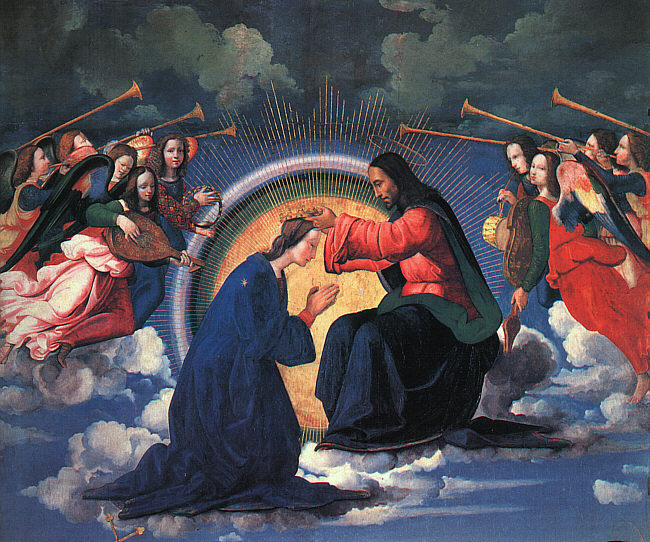
On December 8, churches hold special Masses and processions in honour of Mary’s conception. The day is marked by prayers, hymns, and readings that focus on Mary’s purity and her role in the story of salvation. In some countries, the feast is a public holiday, and communities may gather for communal meals or local festivities. Artistic depictions of Mary, often showing her standing on a crescent moon and surrounded by stars, are prominent in churches and homes. The faithful may also recite Marian prayers or wear medals inscribed with invocations to the Immaculate Conception.


Joining in
Visitors attending the Feast of the Immaculate Conception can expect vibrant church services, especially in Catholic-majority countries like Spain, France, Ethiopia, and Eritrea. Major cathedrals and shrines, such as the Basilica of the National Shrine of the Immaculate Conception, become focal points for worship and celebration. It is a respectful and contemplative occasion, so modest dress and quiet participation in liturgies are appropriate for newcomers.
Sources and attribution
This page is Mela's own summary, written in new words. Its facts are drawn from the Wikipedia article Immaculate Conception, whose text is available under the CC BY-SA 4.0 licence, and from its Wikidata record (CC0). Each photo is credited to its author beside it. For the full account, read the originals below.
Read more
- Immaculate Conception on WikipediaEncyclopedia
- Encyclopaedia BritannicaArticle
- More photos on Wikimedia CommonsPhotos
- Wikidata recordOpen data
This page was written with AI assistance from the sources listed above, and checked automatically before publishing. Spotted a mistake? Tell us. Last refreshed 2026-10-02.
 Spiritual
 Spiritual
 Cultural
 Cultural
 Spiritual
 Spiritual
 Spiritual
 Spiritual