National Foundation Day
Japan marks the founding of the nation and its imperial line.
National Foundation Day is a public holiday in Japan held every 11 February. The day commemorates the legendary founding of the nation and the accession of Emperor Jimmu, and is observed with parades, family gatherings, and concerts across the country.
- Observed every 11 February across Japan
- Commemorates the legendary accession of Emperor Jimmu
- Features parades, family reunions, and concerts
- Known in Japanese as Kenkoku Kinen no Hi
- Celebrated as a public holiday since 1967
What it is
National Foundation Day, known in Japanese as Kenkoku Kinen no Hi, is a day when people across Japan reflect on the origins of their country. The holiday honors the legendary first emperor, Jimmu, whose accession is said to mark the beginning of the Japanese nation. While rooted in myth, the day is a time for citizens to express gratitude for their country and consider its history. It is a moment for families to come together, and for communities to celebrate the unity and continuity of the Japanese state.
Where it comes from
The holiday traces its roots to ancient traditions celebrating the start of Japan with Emperor Jimmu, as described in early chronicles like the Kojiki and Nihon Shoki. Originally, the date was based on the traditional lunar calendar, but in the Meiji era, it was fixed to 11 February to align with the Gregorian calendar and the 1889 promulgation of the Meiji Constitution. The holiday, once called Kigensetsu, was intended to foster national unity and loyalty to the emperor, especially during Japan's modernization. After World War II, the holiday was re-established in a more inclusive form, focusing on national reflection rather than imperial worship.
How it is celebrated
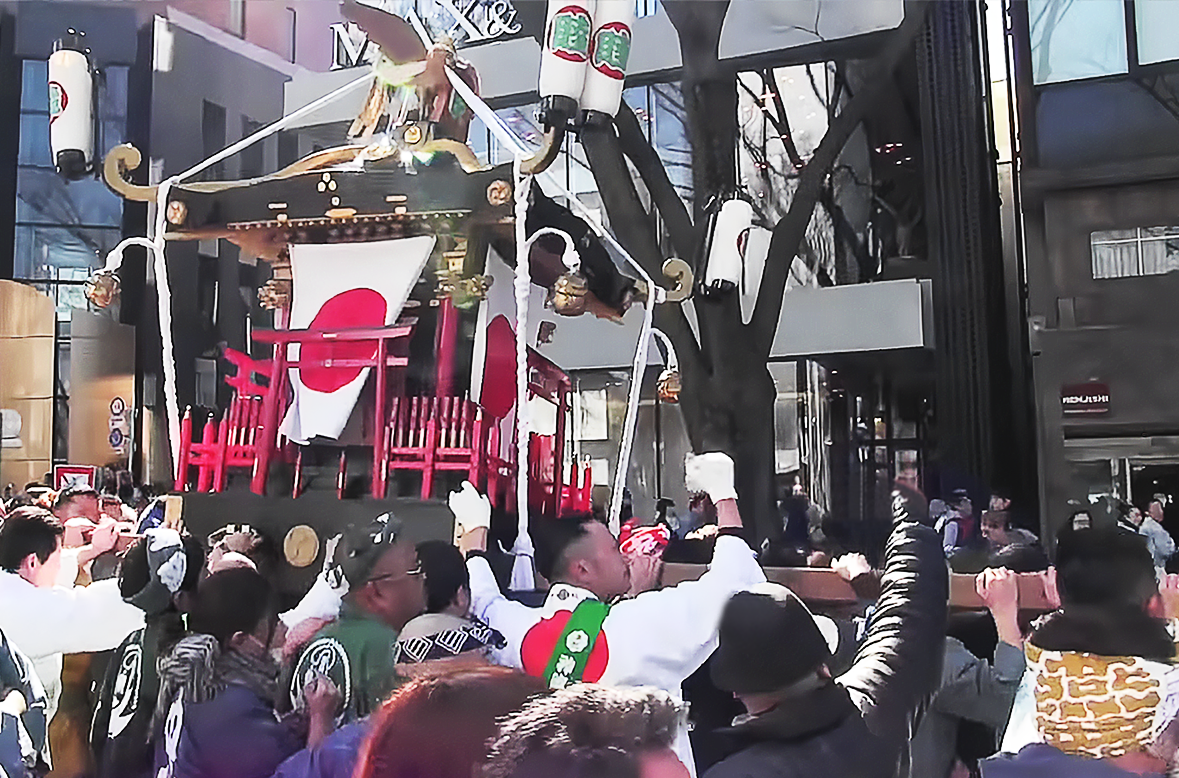
On National Foundation Day, Japanese families often reunite, and local communities organize parades and concerts. In some places, portable shrines called mikoshi are carried through the streets, adding a festive atmosphere. While the holiday is not associated with religious rituals for most, it is a time for expressing appreciation for the nation and its history. Schools and public institutions may hold ceremonies or display the national flag. The mood is generally reflective and celebratory, with people taking the opportunity to rest and spend time with loved ones. Public speeches and cultural events may highlight the significance of Japan’s founding and its enduring traditions.


Joining in
Visitors in Japan on 11 February will find the main celebrations taking place in cities and towns across the country. Parades and community gatherings are common, and some shrines may host special events. While the holiday is more subdued than some other national days, it offers a chance to witness local customs and join in public festivities. Expect a calm, respectful atmosphere, with many people enjoying a day off work and spending time with family.
Sources and attribution
This page is Mela's own summary, written in new words. Its facts are drawn from the Wikipedia article National Foundation Day (Japan), whose text is available under the CC BY-SA 4.0 licence, and from its Wikidata record (CC0). Each photo is credited to its author beside it. For the full account, read the originals below.
Read more
- National Foundation Day (Japan) on WikipediaEncyclopedia
- More photos on Wikimedia CommonsPhotos
- Wikidata recordOpen data
This page was written with AI assistance from the sources listed above, and checked automatically before publishing. Spotted a mistake? Tell us. Last refreshed 2026-10-03.
 Cultural
 Spiritual
 Spiritual
 Sports
 National days
 National days
 National days
 National days