
Gaecheonjeol
Marking the legendary founding of the first Korean state by Dangun
Gaecheonjeol, or National Foundation Day, is a public holiday in South Korea held every 3 October. It commemorates the legendary founding of Gojoseon by Dangun, regarded as the beginning of the Korean nation, and is also recognized in North Korea with ceremonies.
- Celebrated every 3 October in South Korea
- Marks the legendary founding of Gojoseon by Dangun
- Ceremonies held at the Mausoleum of Tangun in North Korea
- Known as 'the day the heavens opened'
- Official public holiday since 1909
What it is
Gaecheonjeol, known in English as National Foundation Day, is a day when Koreans reflect on the legendary origins of their nation. Celebrated every 3 October in South Korea, it honors the founding of Gojoseon by Dangun, a figure deeply rooted in Korean mythology. For many, the holiday is a time to remember the story of how the heavens opened and the first Korean kingdom began, symbolizing unity and the enduring spirit of the Korean people. The day is both a celebration of national identity and a moment to connect with ancient traditions that have shaped Korea’s history.
Where it comes from
The name Gaecheonjeol means 'the day the heavens opened,' referring to the mythic event when Hwanung descended from heaven to live among humans on 3 October 2457 BCE. This event is said to have led to the founding of Gojoseon by Dangun in 2333 BCE, marking the start of the Korean nation. Over centuries, various harvest and ancestral ceremonies were held in ancient Korean realms around this time. The holiday was formally established in 1909 and, after Korea’s liberation from Japanese rule, was fixed to 3 October on the Gregorian calendar in 1949.
How it is celebrated
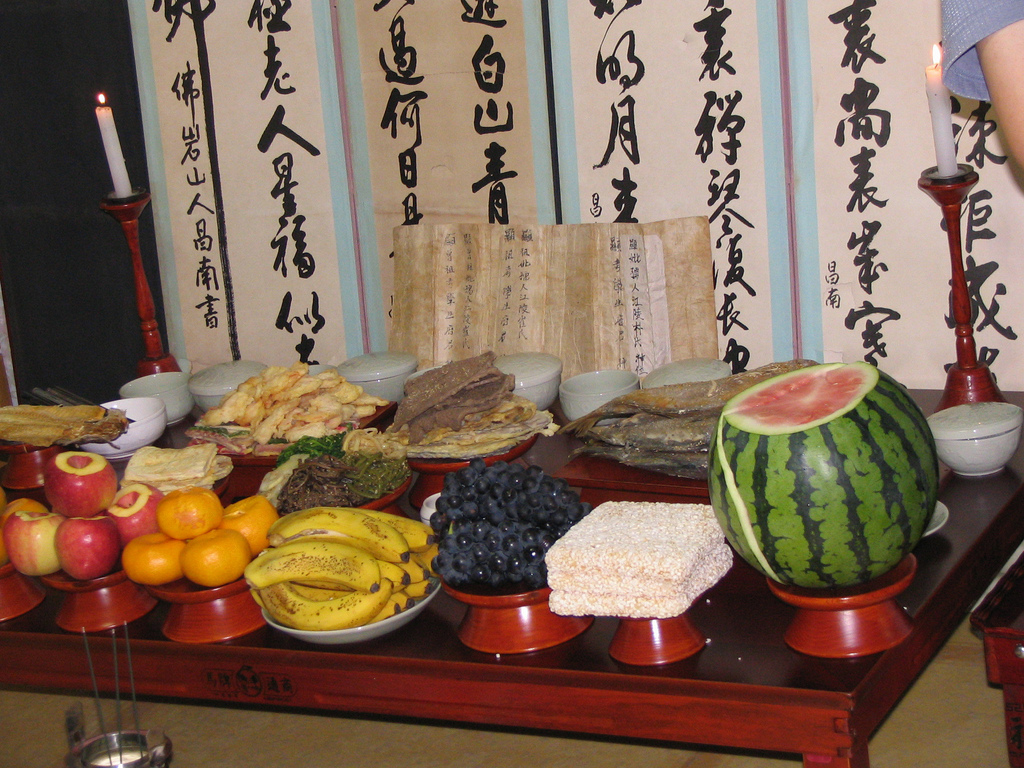
In South Korea, Gaecheonjeol is marked by official ceremonies, cultural events, and gatherings that honor the nation’s legendary beginnings. People may visit historical sites or participate in commemorations that recall Dangun’s founding of Gojoseon. Traditional music, performances, and the singing of the National Foundation Day song are part of the observance. Some dress in hanbok, the traditional Korean attire, and families may spend time together reflecting on national history. In North Korea, while it is not a public holiday, a ceremony is held at the Mausoleum of Tangun, keeping the myth alive in a different form.


Joining in
If you visit South Korea on 3 October, you’ll find public ceremonies in major cities, especially Seoul, where historical sites and monuments related to Dangun and Gojoseon are focal points. Expect to see people in traditional dress, hear patriotic songs, and witness a sense of national pride. While many businesses close for the day, public spaces and cultural venues often host special events, making it a meaningful time for visitors to experience Korean heritage and community spirit.
In the news
Sources and attribution
This page is Mela's own summary, written in new words. Its facts are drawn from the Wikipedia article National Foundation Day (Korea), whose text is available under the CC BY-SA 4.0 licence, and from its Wikidata record (CC0). Each photo is credited to its author beside it, and news headlines link to their publishers. For the full account, read the originals below.
Read more
- National Foundation Day (Korea) on WikipediaEncyclopedia
- Official websiteOfficial site
- More photos on Wikimedia CommonsPhotos
- Wikidata recordOpen data
This page was written with AI assistance from the sources listed above, and checked automatically before publishing. Spotted a mistake? Tell us. Last refreshed 2026-10-02.
 Cultural
 National days
 Seasonal
 Cultural
 National days
 National days
 National days
 National days