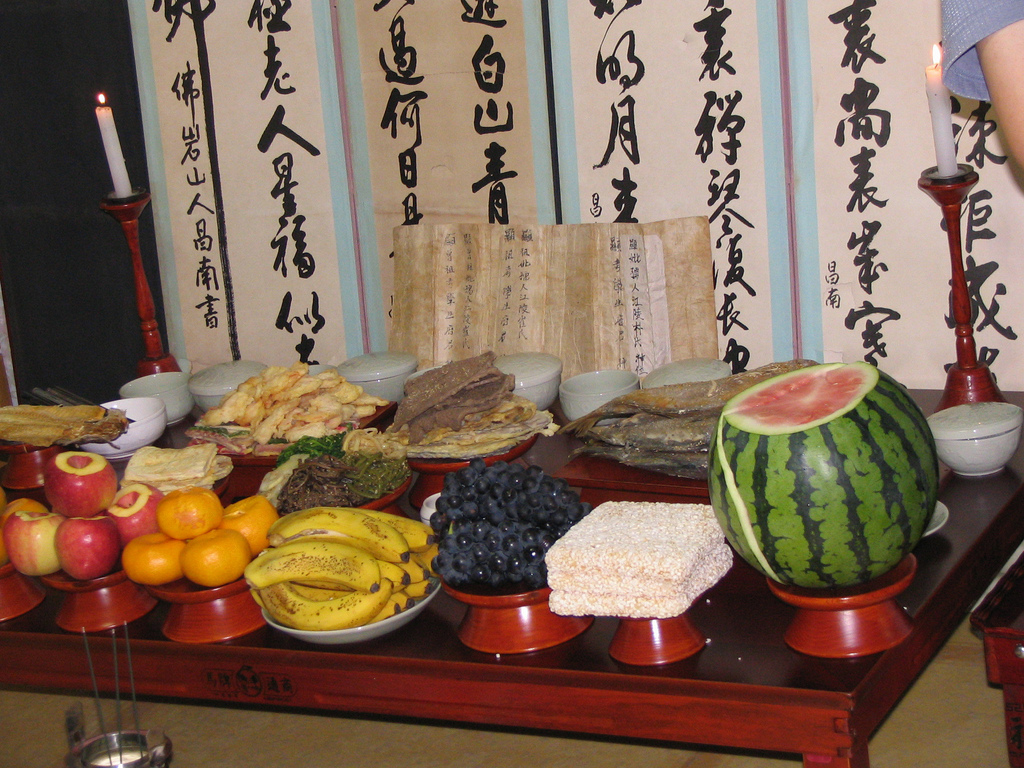
Chuseok, also known as Hangawi, is a major Korean harvest festival celebrated on the 15th day of the 8th lunar month, coinciding with the full moon. Marked by family gatherings, ancestral rites, and traditional foods, it is observed across both South and North Korea, typically lasting three days in the South and one day in the North.
- Families honor ancestors with Charye memorial rites and grave visits
- Songpyeon rice cakes are made and shared under the full autumn moon
- Traditional hanbok clothing is worn for the occasion
- Chuseok lasts three days in South Korea, one day in North Korea
- Gift-giving of food and daily goods is a modern custom
What it is
Chuseok is one of the most important traditional festivals in Korea, celebrated as a time to honor ancestors and give thanks for the year’s harvest. Families gather in their ancestral hometowns to pay respects through rituals and to share special foods that highlight the bounty of autumn. The festival is deeply rooted in the rhythms of agricultural life, and its customs reflect a blend of spiritual beliefs and communal values. For many Koreans, Chuseok is a cherished occasion to reconnect with family, remember those who came before, and look forward to prosperity in the coming year.
Where it comes from
Chuseok’s origins are traced to ancient Korea, possibly beginning with gabae, a weaving contest held during the Silla kingdom that culminated in feasting and games. Some scholars believe it also has roots in shamanistic harvest moon celebrations, where offerings of new crops were made to deities and ancestors. Over time, these early rituals evolved into the ancestor memorial services and harvest festivities that define Chuseok today. The festival’s timing and customs are closely linked to the lunar calendar and the agricultural cycle.
How it is celebrated
Celebrations begin with Charye, a morning ancestral memorial rite where families prepare and offer freshly harvested foods—like songpyeon rice cakes, fruits, meats, and rice wines—arranged in a traditional manner. Many also visit ancestral graves for Seongmyo, tidying the sites and making offerings. Traditional dress, such as hanbok in the South or Choson-ot in the North, is often worn. The holiday table features songpyeon, steamed over pine needles for fragrance, as well as hangwa sweets and rice wines like sindoju. The rest of the day is spent sharing meals, playing folk games, and enjoying time with relatives. Gift-giving has become a modern custom, with items ranging from daily necessities to specialty foods.


Joining in
Visitors in Korea during Chuseok will notice cities emptying as people travel to their hometowns, and many businesses close for the holiday. In Seoul, the National Folk Museum hosts public festivities where newcomers can observe rituals, taste traditional foods, and see performances. Expect crowded roads and sold-out transport, as this is the busiest travel period of the year. While Chuseok is a family-centered holiday, public events offer a welcoming glimpse into Korean traditions and hospitality.
Sources and attribution
This page is Mela's own summary, written in new words. Its facts are drawn from the Wikipedia article Chuseok, whose text is available under the CC BY-SA 4.0 licence, and from its Wikidata record (CC0). Each photo is credited to its author beside it. For the full account, read the originals below.
Read more
- Chuseok on WikipediaEncyclopedia
- Chuseok travel guide on WikivoyageTravel guide
- More photos on Wikimedia CommonsPhotos
- Wikidata recordOpen data
This page was written with AI assistance from the sources listed above, and checked automatically before publishing. Spotted a mistake? Tell us. Last refreshed 2026-10-02.
 Cultural
 National days
 Cultural
 Seasonal
 Seasonal
 Seasonal
 Seasonal
 Seasonal