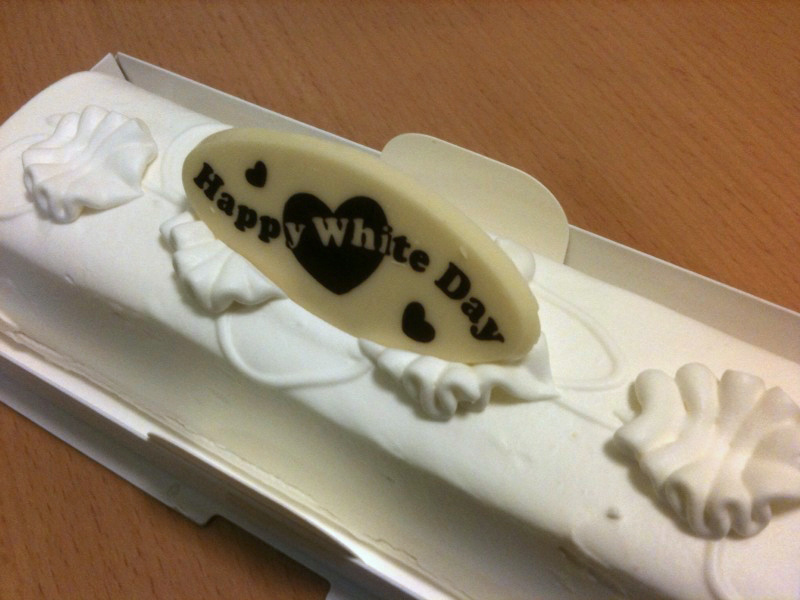
White Day
A day for men to return gifts to women, one month after Valentine's Day
White Day is a cultural celebration held annually on March 14 in Japan and several East Asian countries. On this day, men give gifts to women who gave them chocolates or presents on Valentine's Day, continuing a unique tradition of reciprocal gift-giving.
- Men give gifts to women who gave them chocolates on Valentine's Day
- Popular gifts include white chocolate, marshmallows, and accessories
- Originated in Japan in 1978 as a response to Valentine's Day
- Observed on March 14 in Japan, South Korea, China, and Taiwan
- Return gifts are often expected to be worth two to three times the original
What it is
White Day is a special occasion observed in Japan and other East Asian countries, where it serves as a companion to Valentine's Day. While women traditionally give chocolates to men on February 14, White Day reverses the roles: men are expected to return the gesture by giving gifts to the women who gifted them. The day is marked by exchanges between romantic partners, friends, and colleagues, reflecting both affection and social courtesy. For many, it is a way to acknowledge kindness or love received, and to maintain harmonious relationships.
Where it comes from
White Day began in Japan in 1978, created by the National Confectionery Industry Association as a response to the growing popularity of Valentine's Day. The idea was that men should reciprocate the gifts they received from women, especially chocolates, by giving something in return a month later. The first version, called Marshmallow Day, was started by a confectionery company in Fukuoka in 1977. Soon after, the celebration was rebranded as White Day, with white chocolate and other pale-colored gifts promoted as the ideal presents. The tradition quickly spread to other East Asian countries.
How it is celebrated
On March 14, men who received chocolates or gifts from women on Valentine's Day are expected to give something back. Popular White Day gifts include white chocolate, marshmallows, cookies, candies, and sometimes more personal items like jewelry, accessories, or even lingerie. The value of the return gift is often expected to be two to three times that of the original, a practice known as 'sanbai kaeshi' or 'triple the return.' Gift exchanges happen not only between couples but also among friends and coworkers, making it a widespread social event. While the tradition has seen a decline in recent years due to changing gender roles and customs, it remains a notable part of the spring calendar in Japan and neighboring countries.
Joining in
If you are visiting Japan, South Korea, Taiwan, or China around March 14, you may notice shops filled with special White Day displays featuring white-themed sweets and gifts. Department stores and confectioneries often offer limited-edition treats, and some cafes create themed desserts. While the day is not marked by public festivities, it is a visible part of everyday life, especially in workplaces and schools. As a visitor, you can join in by exchanging small gifts with friends or simply enjoying the seasonal confections that appear for the occasion.
Sources and attribution
This page is Mela's own summary, written in new words. Its facts are drawn from the Wikipedia article White Day, whose text is available under the CC BY-SA 4.0 licence, and from its Wikidata record (CC0). Each photo is credited to its author beside it. For the full account, read the originals below.
Read more
This page was written with AI assistance from the sources listed above, and checked automatically before publishing. Spotted a mistake? Tell us. Last refreshed 2026-10-02.
 Sports
 Spiritual
 Cultural
 Cultural
 Cultural
 Cultural
 Cultural
 Cultural