
Tasu'a marks the eve before Ashura and is observed mainly by Shia Muslims in countries like Iran, Iraq, and Lebanon. Held on the ninth day of Muharram in the Islamic calendar, it honors the courage and sacrifice of Husayn ibn Ali and his companions before their deaths at Karbala.
- Observed on the ninth day of Muharram in the Islamic calendar
- Focuses on mourning Husayn ibn Ali and his companions
- Processions and dramatic reenactments are common in Iran and Iraq
- Major public rituals take place in cities like Karbala and Najaf
- Symbolic objects such as flags and biers feature in processions
What it is
Tasu'a is a significant day for Shia Muslims, set aside to mourn the events that led up to the death of Husayn ibn Ali, the grandson of the Prophet Muhammad and the third Shia Imam. Falling a day before Ashura, Tasu'a serves as a time to reflect on the loyalty and steadfastness shown by Husayn and those with him at Karbala. For many, this day is an expression of grief, solidarity, and deep spiritual contemplation, connecting participants to a legacy of resistance against injustice and a commitment to moral principles. The meaning of Tasu'a extends beyond ritual, shaping the religious identity and communal memory of Shia communities.
Where it comes from
Tasu'a has its roots in the tragic events of Karbala in 680 CE, when Husayn ibn Ali and his followers faced the forces of the Umayyad caliph Yazid. The confrontation, originally expected to occur on this day, was postponed, giving Husayn’s group a final night together. During this time, Husayn encouraged his companions to leave for their safety, but nearly all chose to remain. The sorrowful events of this night, along with the subsequent battle, became a powerful symbol for Shia Muslims, marking the division between Shia and Sunni communities and solidifying practices of mourning and remembrance.
How it is celebrated
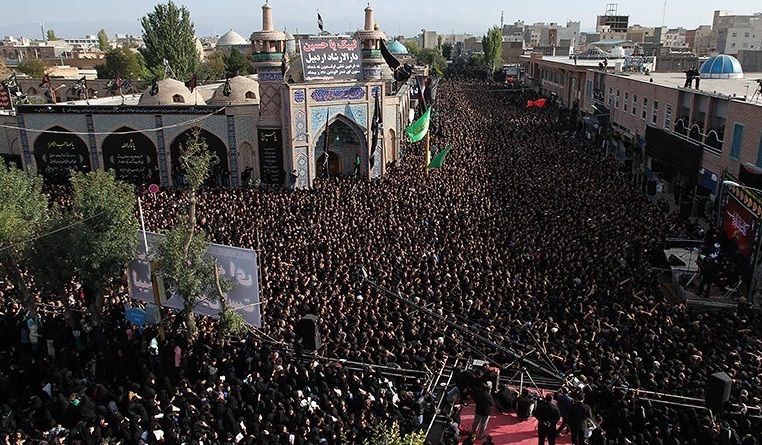
Commemorations on Tasu'a include gatherings where stories of Karbala are recounted and elegies are recited to evoke empathy and tears. These gatherings, known as majalis, often take place in special halls or mosques dedicated to mourning. In some regions, dramatic reenactments of the Karbala story are performed, particularly focusing on Abbas ibn Ali, Husayn’s half-brother. Public processions fill the streets in major Shia cities, with mourners chanting and sometimes engaging in ritual chest-beating or self-flagellation, though the more extreme forms are controversial and banned in certain countries. Symbolic items such as standards and replicas of Husayn’s bier are carried, and in places like Najaf, Iraq, processions head toward the shrine of Ali ibn Abi Talib, carrying torches in the evening.


Joining in
If you wish to witness Tasu'a, cities with large Shia populations such as Karbala and Najaf in Iraq, as well as many cities across Iran and Lebanon, host prominent observances. Visitors can expect somber processions, passionate recitations of poetry and history, and a powerful sense of collective mourning. Out of respect, modest dress and a quiet, reflective demeanor are recommended. While some rituals are reserved for the faithful, respectful outsiders are often welcome to observe public gatherings and processions.
Sources and attribution
This page is Mela's own summary, written in new words. Its facts are drawn from the Wikipedia article Tasu'a, whose text is available under the CC BY-SA 4.0 licence, and from its Wikidata record (CC0). Each photo is credited to its author beside it. For the full account, read the originals below.
Read more
This page was written with AI assistance from the sources listed above, and checked automatically before publishing. Spotted a mistake? Tell us. Last refreshed 2026-10-03.
 Spiritual
 Sports
 Spiritual
 Seasonal
 Spiritual
 Spiritual
 Spiritual
 Spiritual