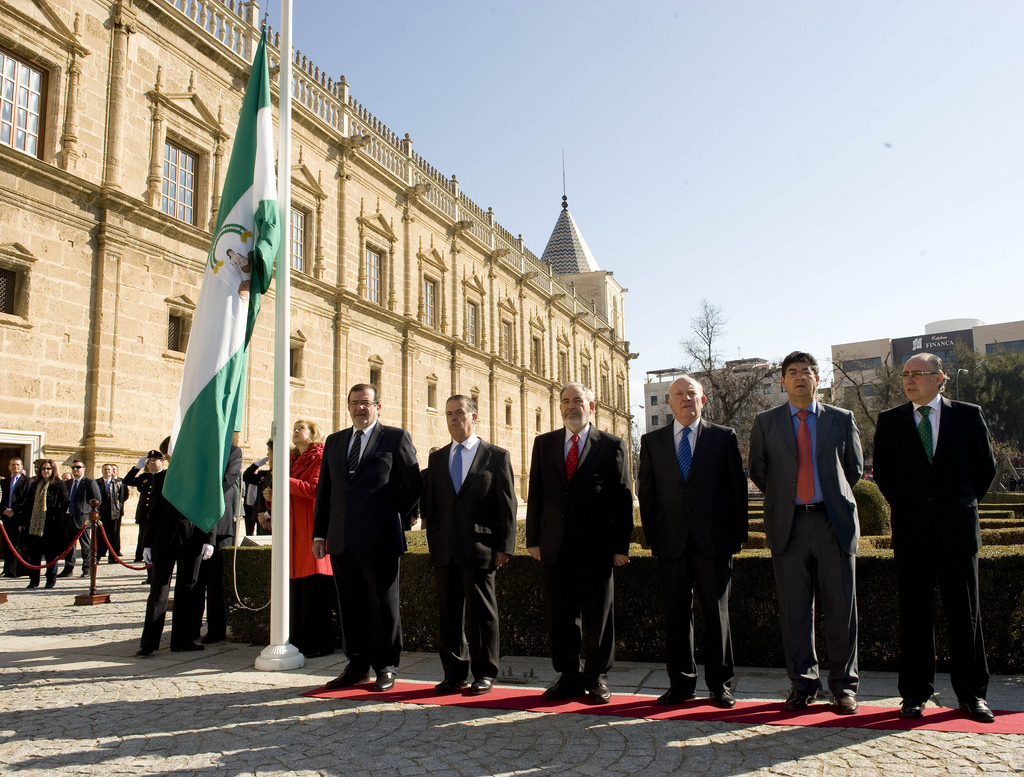
Andalusia Day, or Día de Andalucía, is observed on 28 February across Andalusia, Spain. It marks the 1980 referendum in which Andalusians voted for their Statute of Autonomy, establishing the region as an autonomous community.
- Celebrated on 28 February across Andalusia
- Commemorates the 1980 autonomy referendum
- Balconies decorated with green-and-white flags
- Traditional breakfast: toast with olive oil and orange juice
- Children sing the Himno de Andalucía in schools
What it is
Andalusia Day is a regional holiday that celebrates the identity and self-governance of Andalusia, Spain's southernmost autonomous community. The day is rooted in the collective memory of the 1980 referendum, when Andalusians voted to gain autonomy within Spain. For many, it is a moment of pride and reflection on the region's distinct culture, language, and traditions. The celebration is both civic and festive, bringing together communities to honour their shared history and express their regional spirit.
Where it comes from
The origins of Andalusia Day lie in the 28 February 1980 referendum, a pivotal event in which the people of Andalusia voted for the Statute of Autonomy. This statute granted the region self-government within Spain, following a period of political transition after the end of Franco's regime. The day has been celebrated annually since 1980, serving as a reminder of the region's journey toward recognition and the affirmation of its unique identity within the Spanish state.
How it is celebrated
On Andalusia Day, balconies and public spaces are adorned with the green-and-white flag of Andalusia and festive bunting. Many towns and cities host cultural competitions and community events. In Málaga and other areas, schools close for a cultural week known as Semana Blanca, while the Friday before often features special activities for students. Children enjoy a traditional Andalusian breakfast of toast with olive oil and orange juice, colour pictures of regional symbols, perform plays, and sing the Himno de Andalucía, the regional anthem. Official ceremonies may include honours awarded to notable Andalusians.

Joining in
Visitors in Andalusia on 28 February can expect to see flags and decorations throughout towns and cities, especially in public squares and on balconies. Seville and Málaga are among the places where celebrations are most visible, with cultural events, music, and community gatherings. While schools and some businesses may close, the festive atmosphere offers a welcoming glimpse into Andalusian pride and tradition. Sampling local foods and joining in public festivities is a good way to experience the day.
Sources and attribution
This page is Mela's own summary, written in new words. Its facts are drawn from the Wikipedia article Andalusia Day, whose text is available under the CC BY-SA 4.0 licence, and from its Wikidata record (CC0). Each photo is credited to its author beside it. For the full account, read the originals below.
Read more
- Andalusia Day on WikipediaEncyclopedia
- More photos on Wikimedia CommonsPhotos
- Wikidata recordOpen data
This page was written with AI assistance from the sources listed above, and checked automatically before publishing. Spotted a mistake? Tell us. Last refreshed 2026-10-02.
 Spiritual
 Sports
 Cultural
 Spiritual
 National days
 National days
 National days
 National days