
Canada Day
Marking the anniversary of Canadian Confederation on July 1, 1867
Canada Day is the national day of Canada, celebrated each year on July 1. Marking the anniversary of Canadian Confederation in 1867, it is observed across the country with fireworks, parades, concerts, and gatherings in cities and communities large and small.
- Celebrated on July 1 each year across Canada
- Fireworks and concerts are central to festivities
- Originally called Dominion Day until 1982
- Marks the anniversary of Canadian Confederation in 1867
- Major celebrations held on Parliament Hill, Ottawa
What it is
Canada Day is a federal statutory holiday that commemorates the anniversary of Canadian Confederation, when the provinces of Ontario, Quebec, Nova Scotia, and New Brunswick united to form Canada on July 1, 1867. Often called 'Canada's birthday,' the day is a time for Canadians to reflect on their shared history and identity. Across the country, people gather to celebrate with friends, family, and neighbours, expressing pride in their nation and its diverse communities.
Where it comes from
The first celebration of Confederation took place on July 1, 1867, with bells, bonfires, fireworks, and military displays. The holiday was officially established as Dominion Day in 1879, referencing Canada's status as a dominion within the British Empire. Over time, the day grew in significance, especially after the centennial in 1967, and became more widely celebrated. In 1982, following the patriation of the Canadian constitution, the holiday was renamed Canada Day, reflecting a move towards a distinct national identity.
How it is celebrated
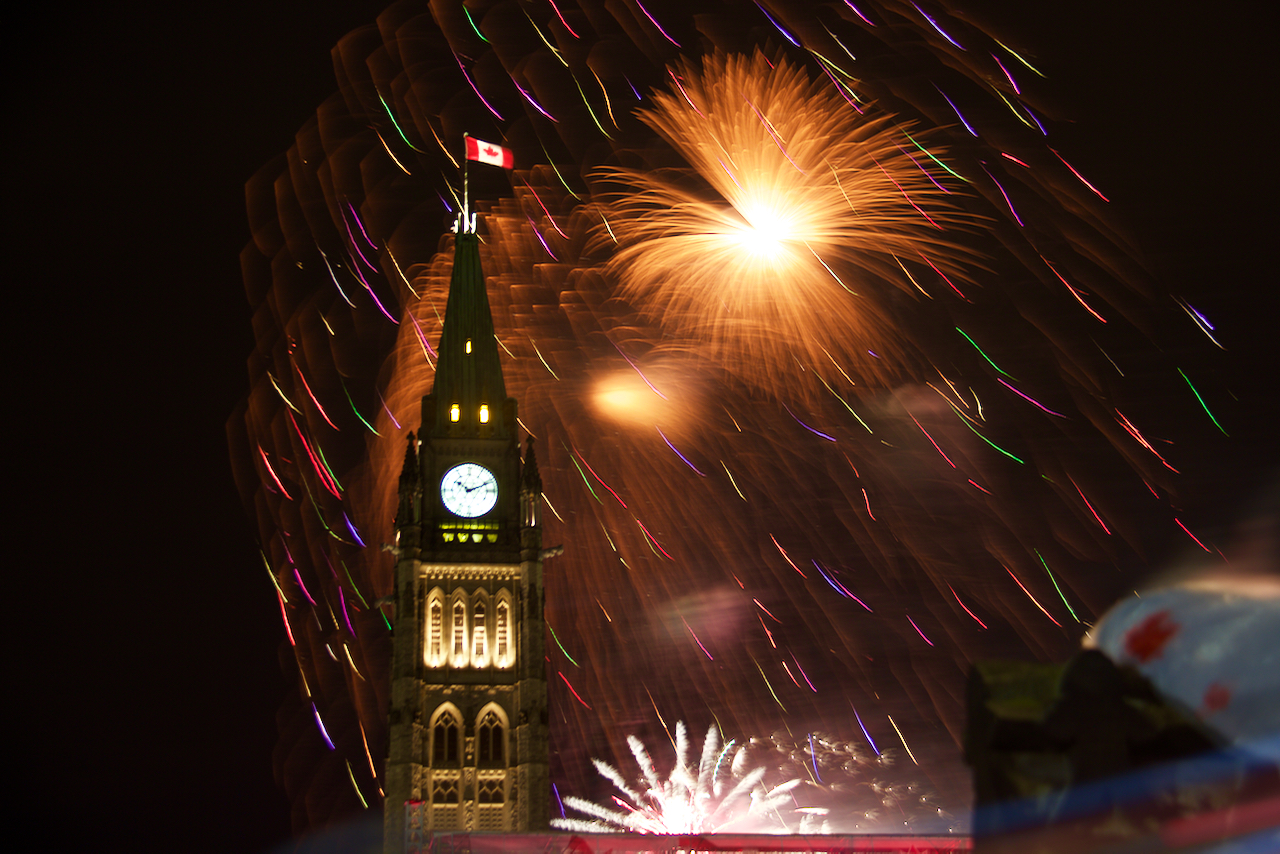
Canada Day is marked by a wide range of festivities, from large public events to intimate gatherings. Fireworks displays light up the skies in cities such as Ottawa, Toronto, Montreal, and Calgary, while parades, concerts, and carnivals fill the streets. Many people enjoy barbecues, picnics, and fairs, often dressed in red and white, the national colours. On Parliament Hill in Ottawa, the capital, official ceremonies and performances bring together thousands, while local communities host their own celebrations with music, dance, and family-friendly activities. The day is both festive and reflective, offering a chance to celebrate Canadian heritage and diversity.


Joining in
Visitors can experience Canada Day in cities and towns across the country, with Ottawa’s Parliament Hill hosting the largest and most iconic celebrations. Expect lively crowds, outdoor concerts, and a spectacular evening fireworks show. Many cities organize family-friendly events, street festivals, and open-air performances. Whether in a bustling city or a small community, joining in means sharing in the spirit of togetherness and national pride that defines the day.
Sources and attribution
This page is Mela's own summary, written in new words. Its facts are drawn from the Wikipedia article Canada Day, whose text is available under the CC BY-SA 4.0 licence, and from its Wikidata record (CC0). Each photo is credited to its author beside it. For the full account, read the originals below.
Read more
- Canada Day on WikipediaEncyclopedia
- Encyclopaedia BritannicaArticle
- More photos on Wikimedia CommonsPhotos
- Wikidata recordOpen data
This page was written with AI assistance from the sources listed above, and checked automatically before publishing. Spotted a mistake? Tell us. Last refreshed 2026-10-02.
 Cultural
 Arts and film
 Spiritual
 Cultural
 National days
 National days
 National days
 National days