
Burns supper
A night of poetry, haggis, and song in honour of Robert Burns
The Burns supper is an annual celebration of Scotland’s national poet, Robert Burns, held on or near his birthday, 25 January. Marked by Scots in Scotland and around the world, the evening features traditional food, whisky, and the recitation of Burns’s poetry.
- Centred on the poetry and songs of Robert Burns
- Haggis, neeps, and tatties form the traditional meal
- The 'Address to a Haggis' is dramatically recited
- Whisky toasts and the Selkirk Grace are key rituals
- Ends with everyone singing 'Auld Lang Syne'
What it is
A Burns supper is a gathering to honour the life and works of Robert Burns, Scotland’s most celebrated poet. Friends, families, and communities come together to share a meal, recite Burns’s poetry, and reflect on his legacy. The event is both formal and informal, ranging from grand dinners hosted by clubs and societies to simple family meals. For many, it is a chance to celebrate Scottish culture, language, and the enduring influence of Burns’s words, which continue to resonate with people across generations.
Where it comes from
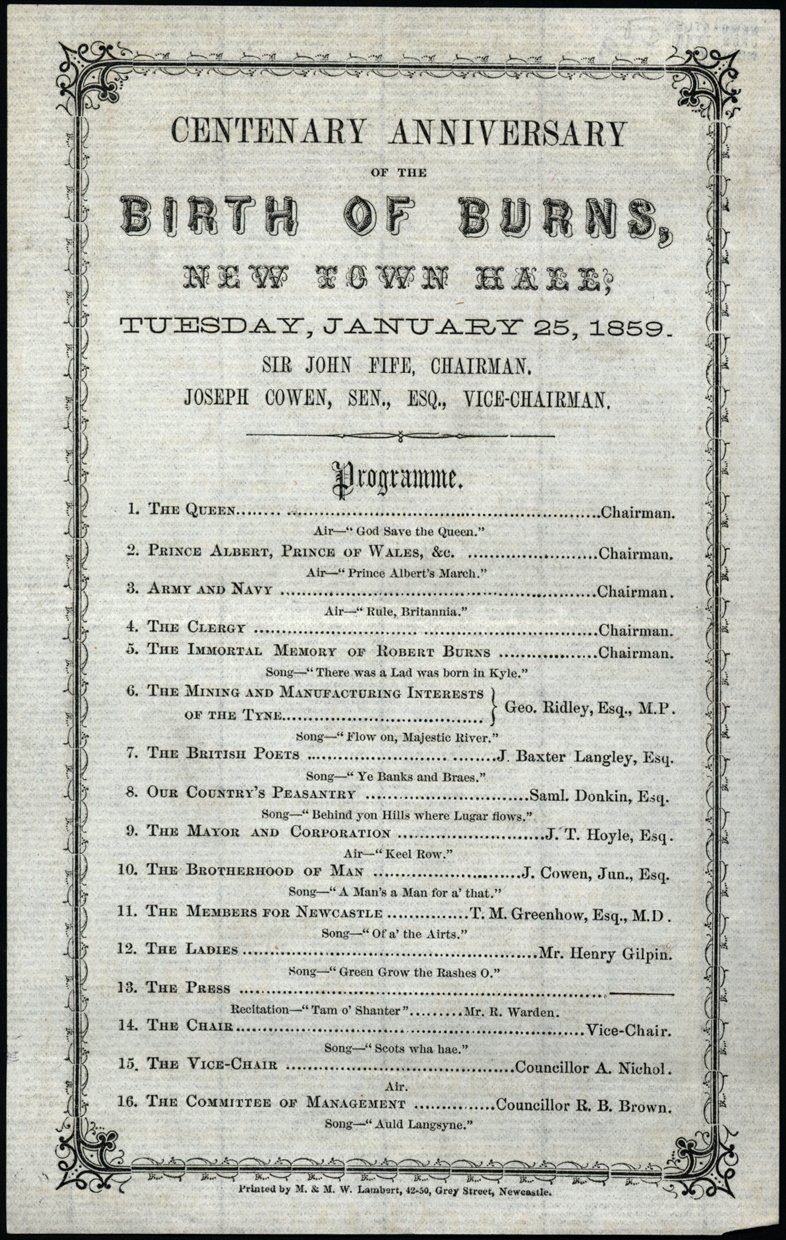
The tradition began in 1801, when friends of Robert Burns held a memorial supper at his birthplace in Ayrshire, marking the fifth anniversary of his death. The earliest Burns Club was founded that same year in Greenock by Ayrshire merchants, some of whom had known Burns personally. After initially celebrating on the wrong date, the discovery of parish records set 25 January as the poet’s true birthday, and since then, Burns suppers have taken place annually on or around this date. The event has grown into a key part of Scottish cultural heritage.
How it is celebrated
A typical Burns supper follows a set order. Guests may be greeted by a bagpiper and welcomed by the host, who often leads the Selkirk Grace in Scots. The meal begins with a soup course, followed by the ceremonial piping in of the haggis—sometimes with vegetarian alternatives—accompanied by music and the dramatic recitation of Burns’s 'Address to a Haggis.' The haggis is served with 'neeps' (mashed swede) and 'tatties' (mashed potatoes), and the meal may include traditional desserts like cranachan or tipsy laird. After dinner, speeches and toasts are made: the 'Immortal Memory' of Burns, the 'Address to the Lassies,' and the 'Reply to the Laddies.' The evening continues with the singing of Burns’s songs and more poetry, ending with everyone joining hands for 'Auld Lang Syne.'



Joining in
Visitors are welcome at Burns suppers held by clubs, societies, and communities, especially in Scotland but also in places with Scottish heritage, such as Canada. Expect a warm, convivial atmosphere, with plenty of poetry, music, and hearty food. Dress can range from formal attire to kilts or casual wear, depending on the host. Even if you are new to Burns’s work, you’ll find the rituals explained and the spirit of the evening infectious. Many public events welcome newcomers, and you may be invited to join in the singing or even try a hand at reciting a poem.
Sources and attribution
This page is Mela's own summary, written in new words. Its facts are drawn from the Wikipedia article Burns supper, whose text is available under the CC BY-SA 4.0 licence, and from its Wikidata record (CC0). Each photo is credited to its author beside it. For the full account, read the originals below.
Read more
This page was written with AI assistance from the sources listed above, and checked automatically before publishing. Spotted a mistake? Tell us. Last refreshed 2026-10-02.
 Sports
 Sports
 Spiritual
 Sports
 Cultural
 Cultural
 Cultural
 Cultural