
Karva Chauth
A day-long fast for marital harmony and the well-being of husbands
Karva Chauth is a Hindu festival observed mainly by married women in Northern and Western India and Nepal, usually in October or November. Women fast from sunrise to moonrise, praying for the safety and longevity of their husbands, with rituals and gatherings marking the day.
- Women fast from sunrise to moonrise for their husbands' well-being
- Celebrated mainly in Northern and Western India and Nepal
- Evening rituals include storytelling and group prayers
- Pre-dawn meal 'sargi' is an important tradition
- The fast is broken after sighting the moon
What it is
Karva Chauth is a significant Hindu festival where married women, and in some regions unmarried women, observe a strict fast from dawn until moonrise. The fast is kept for the well-being and long life of their husbands, reflecting deep marital devotion. The day is marked by rituals, prayers, and community gatherings, with women dressing in their finest clothes and adorning themselves with jewellery and henna. The festival is especially meaningful in North and Western India and Nepal, where it strengthens bonds among women and within families.
Where it comes from
The name 'Karva Chauth' comes from 'karva', meaning earthen pot, and 'chauth', meaning fourth, as the festival falls on the fourth day of the waning moon in Kartika. Its origins are linked to the traditions of Northwestern India, where women would pray for the safe return of husbands engaged in distant military campaigns. The festival also coincides with the wheat-sowing season, suggesting a connection to agricultural cycles. Over time, it has come to symbolize not only marital devotion but also the emotional bonds among women, especially those formed through friendship and kinship in new families.
How it is celebrated
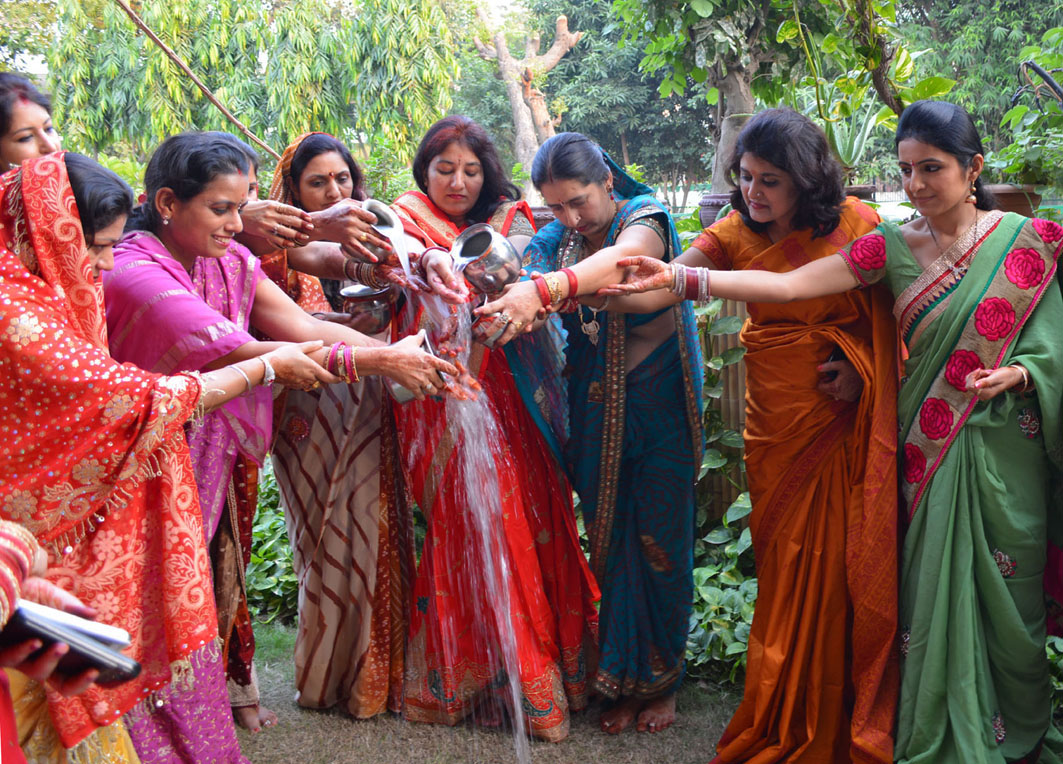
Preparations for Karva Chauth begin days in advance, with women shopping for adornments, jewellery, and special puja items. On the day itself, the fast starts before sunrise, often with a pre-dawn meal called 'sargi', traditionally given by the mother-in-law. Throughout the day, women abstain from food and water, spending time applying henna, exchanging gifts, and visiting friends and relatives. In the evening, women gather in groups, dressed in vibrant saris or lehengas, to perform a community puja. They sit in circles with decorated plates, listen to stories of Karva Chauth, and sing traditional songs. The fast is broken only after sighting the moon, often viewed through a sieve, and offering prayers for their husbands.


Joining in
Visitors in North and Western India during Karva Chauth will notice bustling markets and women dressed in festive attire. The main celebrations take place in homes and community spaces, especially in states like Punjab, Haryana, Rajasthan, and Uttar Pradesh, as well as in Nepal. While the rituals are intimate and centered around family and community, respectful observers may witness the evening gatherings and the poignant moment when women break their fast after moonrise.
Sources and attribution
This page is Mela's own summary, written in new words. Its facts are drawn from the Wikipedia article Karva Chauth, whose text is available under the CC BY-SA 4.0 licence, and from its Wikidata record (CC0). Each photo is credited to its author beside it. For the full account, read the originals below.
Read more
This page was written with AI assistance from the sources listed above, and checked automatically before publishing. Spotted a mistake? Tell us. Last refreshed 2026-10-02.
 Sports
 Spiritual
 Spiritual
 National days
 Spiritual
 Spiritual
 Spiritual
 Spiritual