
Vijayadashami
The festival marking the triumph of good over evil across India and Nepal
Vijayadashami, also known as Dasara or Dussehra, is a major Hindu festival celebrated in India and Nepal, usually in September or October. Observed on the tenth day of the Hindu month of Ashvin, it marks the victory of goddess Durga over Mahishasura in the east and south, and Lord Rama's triumph over Ravana in the north and west.
- Marks the end of Navaratri and Durga Puja
- Effigies of Ravana are burnt in northern India
- Clay idols of Durga are immersed in rivers in the east
- Ramlila performances retell the Ramayana
- Kullu Dussehra features a grand procession of deities
What it is
Vijayadashami is a vibrant Hindu festival that celebrates the victory of good over evil. Its meaning shifts across regions: in the south and east, it marks goddess Durga’s defeat of the demon Mahishasura, while in the north and west, it commemorates Lord Rama’s victory over Ravana. The festival concludes the nine-day Navaratri and Durga Puja, bringing communities together in acts of devotion, storytelling, and celebration. For many, Vijayadashami is a time to reflect on the power of righteousness and to honor the divine forces that protect and restore balance in the world.
Where it comes from
The roots of Vijayadashami lie in Hindu epic literature. The Ramayana recounts how Rama, an incarnation of Vishnu, defeated the demon king Ravana to rescue his wife Sita, symbolizing the restoration of dharma. In the Mahabharata, the day also marks Arjuna’s victory over the Kauravas after retrieving his weapons from a shami tree. Over centuries, these stories have shaped the festival’s themes of justice and renewal. Regional traditions and royal patronage, especially in places like Mysore and the former Vijayanagara Empire, have further enriched its history.
How it is celebrated
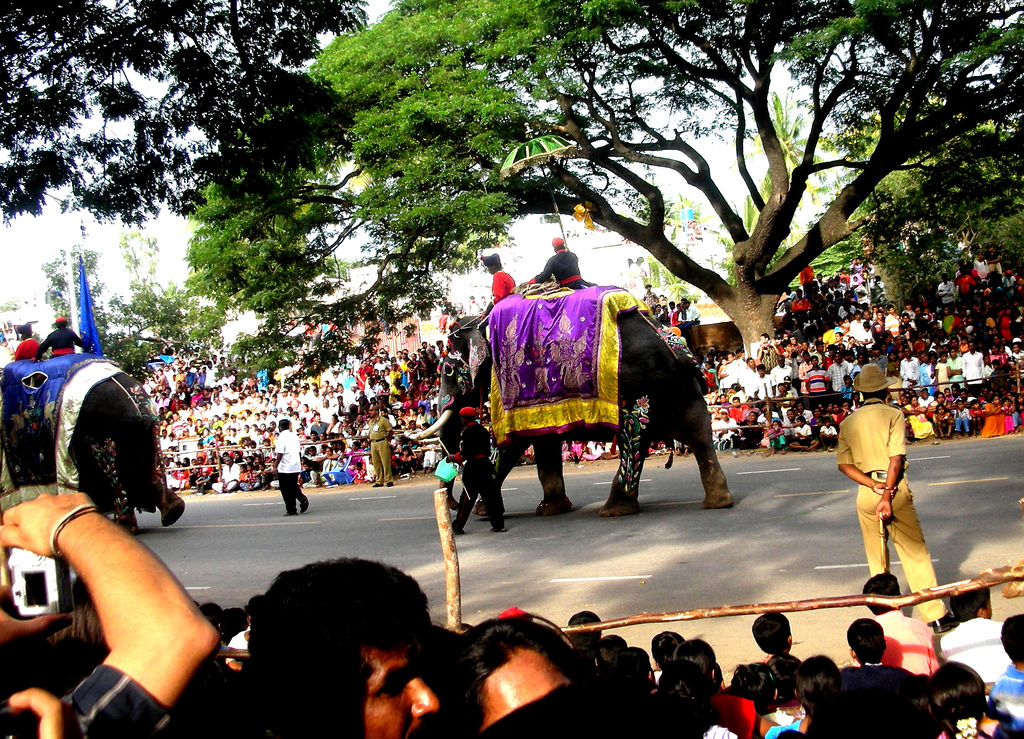
Celebrations vary widely. In northern India, dramatic Ramlila performances retell Rama’s story, culminating in the burning of towering effigies of Ravana, Kumbhakarna, and Meghnath, accompanied by fireworks. In the east and south, processions carry clay images of Durga and other deities to rivers or the sea for immersion, set to music and chants. In Karnataka, homes are decorated with art dolls, and temples host processions and cultural events. In Kerala, the day is linked to Saraswati Puja and the Vidyarambham ritual, where young children begin their formal education. Across regions, the festival is marked by community gatherings, pujas, fasting, and acts of charity.


Joining in
Vijayadashami is celebrated in cities and villages throughout India and Nepal, with major festivities in places like Mysore, Varanasi, and Kullu. Visitors can witness Ramlila performances, join processions, or watch the dramatic burning of effigies. In the south, temple processions and cultural programs fill the streets, while in Kerala, families invite newcomers to participate in the Vidyarambham ritual. Expect large crowds, vibrant music, and a welcoming atmosphere, as communities come together to mark this auspicious day.
In the news
- Mysuru Dasara: 11-day celebrations to begin on October 11, Vijayadashami procession on October 21Deccan Herald
- Mysuru Dasara: 11-day celebrations to begin on October 11, Vijayadashami procession on October 21deccanherald.com
- Vijayadashami | 2026, Durga Puja, Kolkata, Immersion, & Indiabritannica.com
- Navratri 2026: Dates, 9 Goddesses, Colors, Pooja, Fasting and VijayadashamiAstroVed
- RSS to celebrate Vijayadashami Utsav on October 20; Dr Mohan Bhagwat to address swayamsevaksorganiser.org
Sources and attribution
This page is Mela's own summary, written in new words. Its facts are drawn from the Wikipedia article Vijayadashami, whose text is available under the CC BY-SA 4.0 licence, and from its Wikidata record (CC0). Each photo is credited to its author beside it, and news headlines link to their publishers. For the full account, read the originals below.
Read more
- Vijayadashami on WikipediaEncyclopedia
- Encyclopaedia BritannicaArticle
- More photos on Wikimedia CommonsPhotos
- Wikidata recordOpen data
This page was written with AI assistance from the sources listed above, and checked automatically before publishing. Spotted a mistake? Tell us. Last refreshed 2026-10-02.
 Sports
 Spiritual
 Spiritual
 National days
 Spiritual
 Spiritual
 Spiritual
 Spiritual