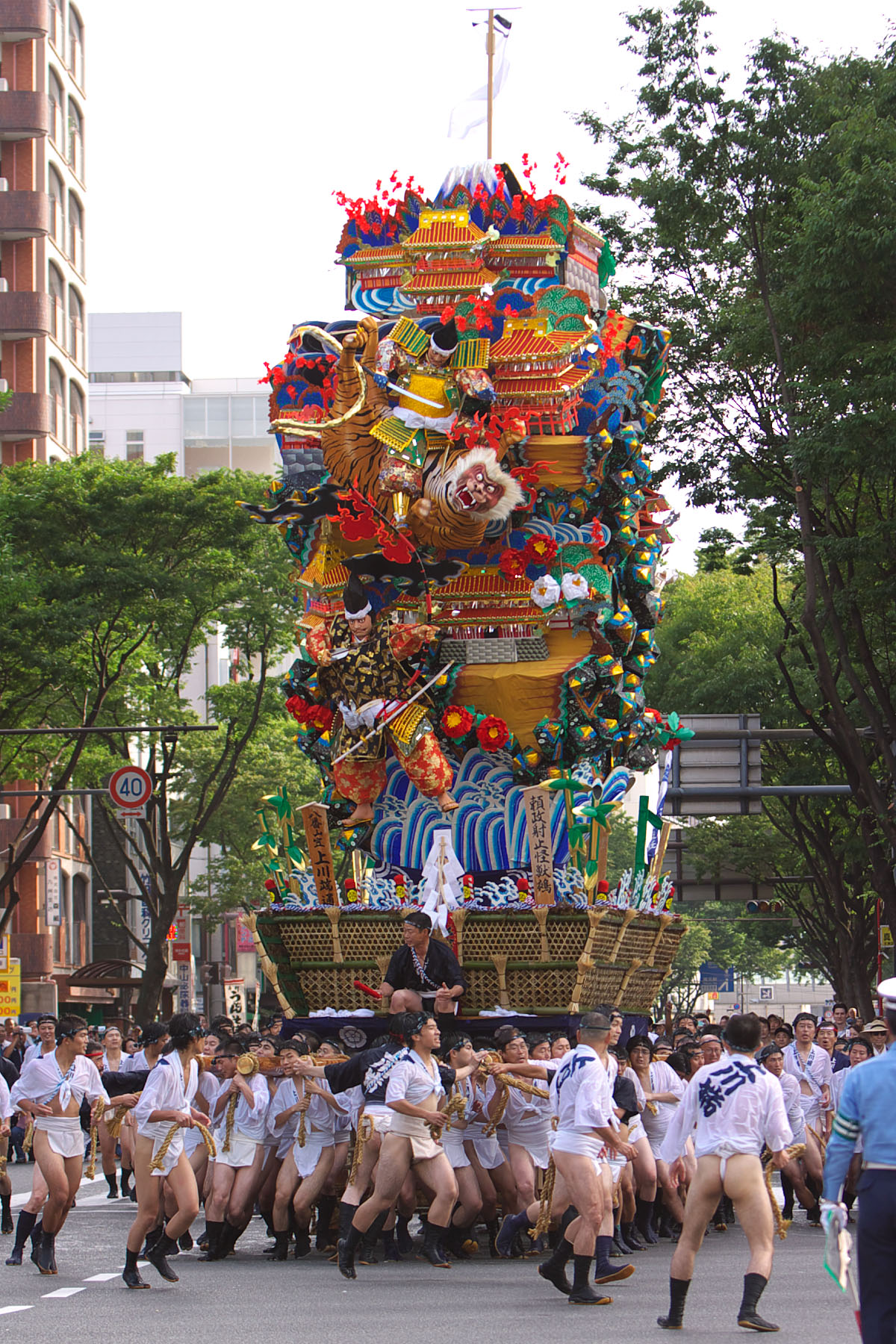
Hakata Gion Yamakasa Festival
A vibrant float-racing festival in Hakata, Fukuoka each July
Hakata Gion Yamakasa is a centuries-old Japanese festival held from July 1 to 15 in Hakata, Fukuoka. Centered at Kushida Shrine, it is famed for its dramatic float races and draws up to a million spectators, celebrating tradition, community, and spiritual heritage.
- Floats called Kakiyama are raced through Hakata’s streets
- Stationary Kazariyama floats reach up to 13 meters high
- Festival dates back to 1241 and honors a plague-healing ritual
- Seven historic districts compete in the main float race
- Designated an Important Intangible Folk Cultural Property in 1979
What it is
Hakata Gion Yamakasa is a major festival in Hakata, Fukuoka, celebrated each July for over 770 years. The heart of the festival is the energetic racing of massive wooden floats, known as Kakiyama, through the city streets. These floats, carried by teams from Hakata’s historic districts, are a symbol of local pride and unity. The festival is deeply rooted in Shinto tradition and is recognized as an Important Intangible Folk Cultural Property of Japan. For locals, it is a time of spirited competition, devotion, and celebration of their shared heritage.
Where it comes from
The festival's origins trace back to 1241, when a plague struck Hakata. According to tradition, the Buddhist monk Enni, founder of Joten-ji temple, was carried through the town on a float while prayers were offered to dispel the disease. Over the centuries, this act evolved into a vibrant community event. In 1586/1587, Hakata was divided into seven districts, and friendly rivalry in float carrying became central to the festivities. The festival’s sounds are so distinctive they have been chosen as one of Japan’s 100 Soundscapes.
How it is celebrated
Celebrations begin on July 1 and build up to the climactic Oiyama race on July 15. The festival features two types of floats: the Kakiyama, which are carried and raced through the streets, and the towering Kazariyama, stationary floats up to 13 meters high, adorned with scenes from history and myth. Teams of men, dressed in traditional happi coats and fundoshi, hoist the Kakiyama—each weighing about a ton—and dash through Hakata’s neighborhoods, cheered on by crowds. The seven historic districts compete for speed and honor, with rituals and events held at Kushida Shrine anchoring the spiritual side of the festival.

Joining in
Visitors can experience the festival’s lively atmosphere throughout Hakata, with main events centered around Kushida Shrine and the city’s historic districts. Arrive early to secure a spot along the race routes, especially for the Oiyama on July 15. Expect energetic crowds, rhythmic chants, and the unforgettable sight of teams racing massive floats through narrow streets. The festival offers a unique glimpse into Hakata’s traditions and community spirit.
Sources and attribution
This page is Mela's own summary, written in new words. Its facts are drawn from the Wikipedia article Hakata Gion Yamakasa, whose text is available under the CC BY-SA 4.0 licence, and from its Wikidata record (CC0). Each photo is credited to its author beside it. For the full account, read the originals below.
Read more
- Hakata Gion Yamakasa on WikipediaEncyclopedia
- Official websiteOfficial site
- UNESCO Intangible Cultural HeritageArticle
- More photos on Wikimedia CommonsPhotos
- Wikidata recordOpen data
This page was written with AI assistance from the sources listed above, and checked automatically before publishing. Spotted a mistake? Tell us. Last refreshed 2026-10-02.
 Cultural
 Spiritual
 Spiritual
 Sports
 Spiritual
 Spiritual
 Spiritual
 Spiritual