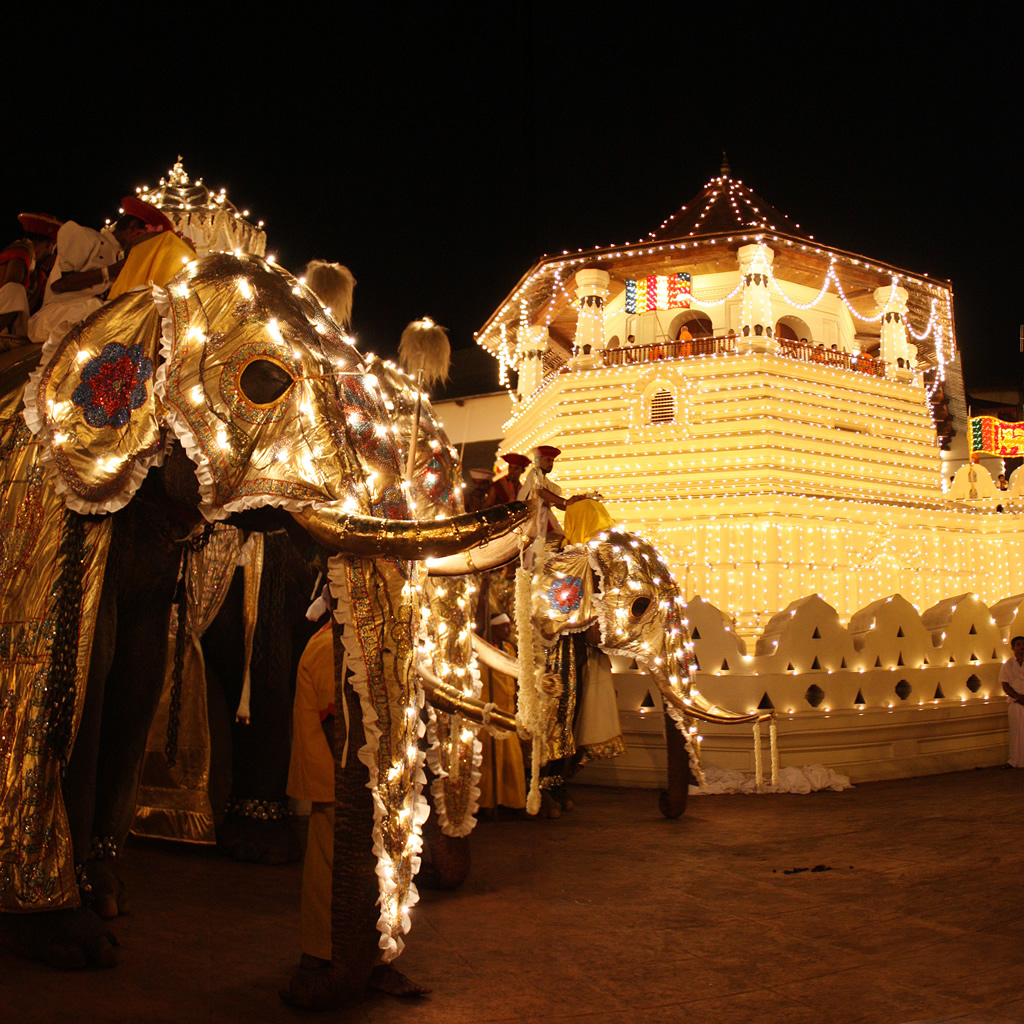
Esala Perahera is a major Buddhist festival held annually in July or August in Kandy, Sri Lanka. This centuries-old event brings together ritual, dance, and a parade of elephants to celebrate the Sacred Tooth Relic at the Temple of the Sacred Tooth.
- The Maligawa Tusker carries a replica of the Sacred Tooth Relic
- Parades feature fire and whip dancers, drummers, and musicians
- The festival ends with the Diya Kepeema water-cutting ceremony
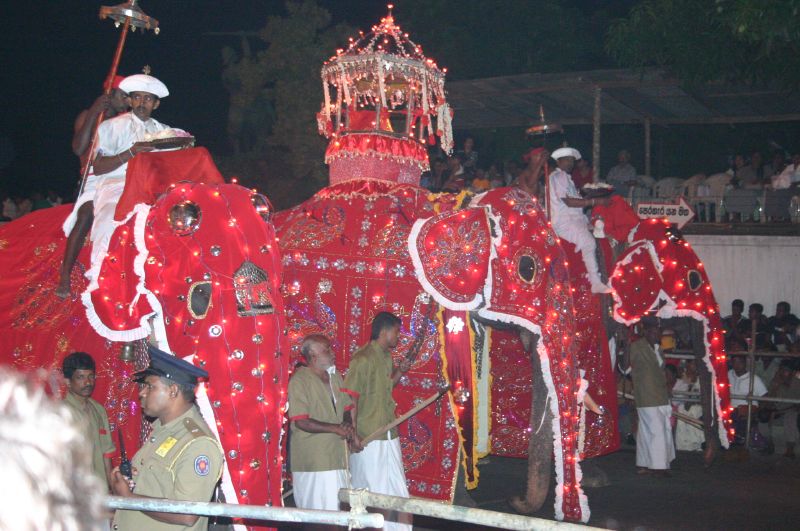
- Elephants are elaborately dressed for the processions
- Female dancers perform in the Pattini Devale segment
What it is
Esala Perahera is one of Sri Lanka’s most significant celebrations, blending religious devotion with cultural spectacle. The festival centres on the Sacred Tooth Relic of the Buddha, which is housed in Kandy’s Temple of the Sacred Tooth. Over several nights, the city comes alive with elaborate processions featuring drummers, dancers, musicians, and decorated elephants. Locals view the event as both a spiritual tribute and a way to seek blessings for their community. The Perahera is a vivid expression of Sri Lankan identity and Buddhist heritage, drawing thousands of devotees and visitors each year.
Where it comes from
The festival traces its roots to two ancient traditions: rituals for rainfall believed to have begun in the 3rd century BCE, and processions honouring the Sacred Tooth Relic, which arrived in Sri Lanka from India in the 4th century CE. Over time, these practices merged, especially during the era of the Kandyan Kingdom. After British rule began in 1815, the responsibility for the relic and the festival shifted to the Buddhist monastic order and a lay custodian. The Perahera has evolved, but its purpose—to venerate the relic and unite the community—remains unchanged.
How it is celebrated
Esala Perahera begins with a ritual involving the planting of a blessed jackfruit tree at four shrines in Kandy, dedicated to guardian deities. The early processions stay within these shrines, but soon, nightly parades fill Kandy’s streets. Each evening, groups from the shrines join a larger procession, carrying sacred objects and led by lavishly adorned elephants. Dancers in traditional costumes perform, accompanied by drummers, whip-crackers, and musicians. The highlight is the Maligawa Tusker, an elephant carrying a replica casket of the Sacred Tooth Relic. Female dancers appear in the Pattini Devale procession, while the Kataragama Devale segment features a colourful peacock dance. The festival ends with a water-cutting ceremony at the Mahaweli River, followed by a daytime parade.


Joining in
If you visit Kandy during Esala Perahera, expect the city’s streets to be packed with both locals and travellers. The main processions take place around the Temple of the Sacred Tooth and the nearby devales. Spectators line the streets early to secure a good view of the parades, which feature lively performances and richly decorated elephants. It’s best to plan ahead, as accommodation fills quickly and festivities continue well into the night. The atmosphere is reverent yet festive, with a strong sense of community and tradition.
Sources and attribution
This page is Mela's own summary, written in new words. Its facts are drawn from the Wikipedia article Kandy Esala Perahera, whose text is available under the CC BY-SA 4.0 licence, and from its Wikidata record (CC0). Each photo is credited to its author beside it. For the full account, read the originals below.
Read more
- Kandy Esala Perahera on WikipediaEncyclopedia
- Encyclopaedia BritannicaArticle
- More photos on Wikimedia CommonsPhotos
- Wikidata recordOpen data
This page was written with AI assistance from the sources listed above, and checked automatically before publishing. Spotted a mistake? Tell us. Last refreshed 2026-10-03.
 Sports
 Spiritual
 Spiritual
 Seasonal
 Spiritual
 Spiritual
 Spiritual
 Spiritual