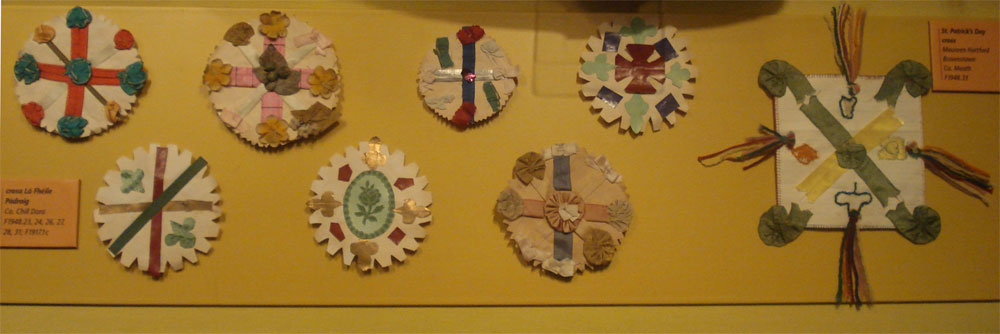
Saint Patrick's Day
A day of Irish heritage, faith, and the colour green, celebrated worldwide
Saint Patrick's Day, held every 17 March, honours Ireland's patron saint and marks the arrival of Christianity in Ireland. Observed in Ireland and by Irish communities across the globe, it blends church services, parades, and lively gatherings, with traditions such as wearing green and shamrocks.
- Held every 17 March, marking Saint Patrick's traditional death date
- Celebrated with parades, céilithe, and wearing green or shamrocks
- Lenten fasting rules are lifted, encouraging festive gatherings
- Landmarks worldwide go green for the Global Greening Initiative
- Observed by Irish communities in dozens of countries
What it is
Saint Patrick's Day is both a religious and cultural festival, marking the traditional death date of Saint Patrick, Ireland's foremost patron saint. It is a day for Irish people and those of Irish descent to celebrate their heritage, faith, and the story of Saint Patrick, who is credited with bringing Christianity to Ireland. The festival is widely observed by various Christian denominations and has grown into a global celebration of Irish culture, with festivities ranging from solemn church services to exuberant public parades and gatherings.
Where it comes from
The festival traces its roots to the early 17th century, when it became an official Christian feast day. Saint Patrick, a 5th-century missionary, is believed to have been born in Roman Britain, kidnapped to Ireland as a teenager, and later returned as a priest to convert the Irish to Christianity. Over centuries, legends about Patrick grew, and his feast day became a focal point for Irish identity. The association with green, shamrocks, and Irish symbols developed over time, influenced by both religious tradition and political history.
How it is celebrated
Celebrations on Saint Patrick's Day are marked by public parades, traditional music sessions known as céilithe, and the widespread wearing of green clothing or shamrocks. Many attend church services, and in Ireland, Lenten restrictions on food and drink are lifted for the day, making social gatherings and the consumption of Irish beer, whiskey, or cider a notable part of the festivities. Parades often feature marching bands, cultural groups, and community organisations, creating a carnival-like atmosphere. A custom known as 'drowning the shamrock' involves placing a shamrock in a drink as a toast to Saint Patrick and Ireland. Since 2010, landmarks around the world have been illuminated in green as part of the 'Global Greening Initiative'.


Joining in
Visitors can join Saint Patrick's Day celebrations in cities across Ireland, with Dublin hosting one of the largest parades and festivals. Major cities worldwide with Irish communities, such as New York, Sydney, and Montreal, also hold vibrant parades and events. Expect crowds dressed in green, lively music, and a welcoming atmosphere. Attending a local parade or céilí, sampling Irish food and drink, and joining in the communal spirit are all ways to experience the festival, whether in Ireland or abroad.
Sources and attribution
This page is Mela's own summary, written in new words. Its facts are drawn from the Wikipedia article Saint Patrick's Day, whose text is available under the CC BY-SA 4.0 licence, and from its Wikidata record (CC0). Each photo is credited to its author beside it. For the full account, read the originals below.
Read more
- Saint Patrick's Day on WikipediaEncyclopedia
- Encyclopaedia BritannicaArticle
- More photos on Wikimedia CommonsPhotos
- Wikidata recordOpen data
This page was written with AI assistance from the sources listed above, and checked automatically before publishing. Spotted a mistake? Tell us. Last refreshed 2026-10-02.
More spiritual festivals
See them all Spiritual
Marvaries
Easter🇦🇺 Australia and 29 more countries
Spiritual
Marvaries
Easter🇦🇺 Australia and 29 more countries
 Spiritual
9Mar
Eid al-Fitr🇦🇫 Afghanistan and 35 more countries
Spiritual
9Mar
Eid al-Fitr🇦🇫 Afghanistan and 35 more countries
 Spiritual
26Mar
Good Friday🇦🇷 Argentina and 42 more countries
Spiritual
26Mar
Good Friday🇦🇷 Argentina and 42 more countries
 Spiritual
21Mar
Palm Sunday🇦🇺 Australia and 27 more countries
Spiritual
21Mar
Palm Sunday🇦🇺 Australia and 27 more countries
 Spiritual
21Mar
Holy Week🇧🇷 Brazil and 20 more countries
Spiritual
21Mar
Holy Week🇧🇷 Brazil and 20 more countries
 Spiritual
25Mar
Maundy Thursday🇦🇷 Argentina and 29 more countries
Spiritual
25Mar
Maundy Thursday🇦🇷 Argentina and 29 more countries
 Spiritual
Marvaries
Holi🇮🇳 India and 11 more countries
Spiritual
Marvaries
Holi🇮🇳 India and 11 more countries
 Spiritual
25Mar
Feast of the Annunciation🇫🇷 France and 5 more countries
Spiritual
25Mar
Feast of the Annunciation🇫🇷 France and 5 more countries