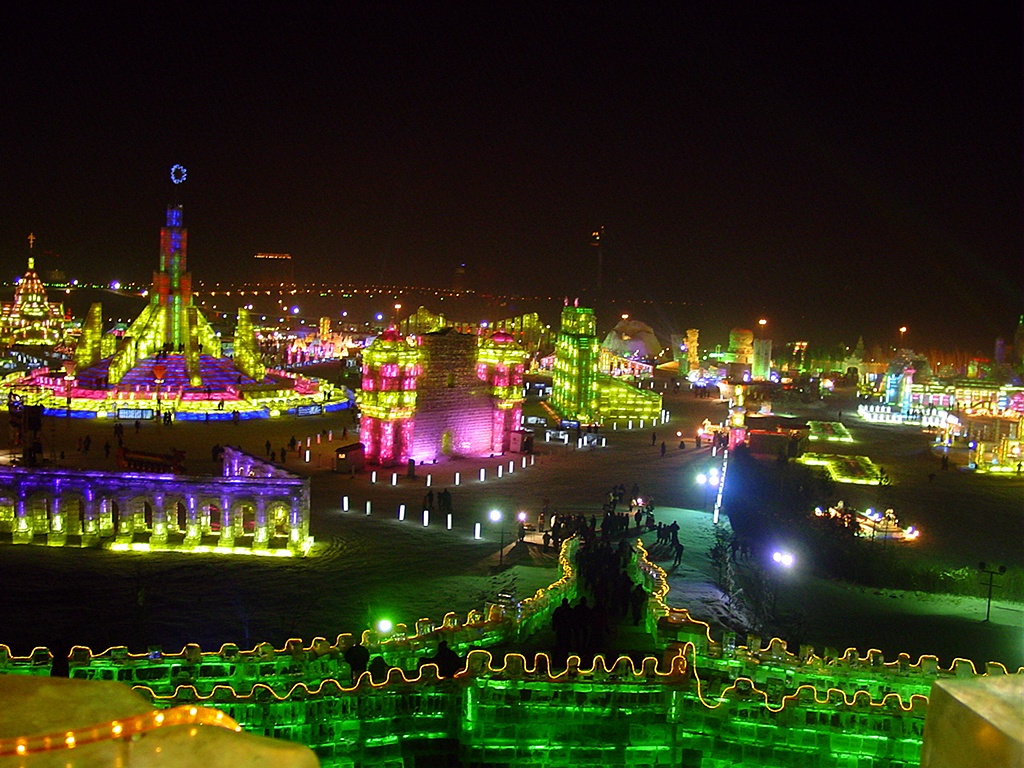
Harbin International Ice and Snow Sculpture Festival
A city of ice: monumental sculptures light up Harbin's winter nights
The Harbin International Ice and Snow Sculpture Festival is the world's largest ice and snow festival, held annually in Harbin, Heilongjiang, China. From late December to late February, the city transforms into a glowing wonderland of monumental ice and snow sculptures, drawing millions of visitors from around the world.
- Features the world's largest ice and snow sculptures
- Ice blocks are cut from the frozen Songhua River
- Sun Island and Ice and Snow World are main exhibition areas
- Attracts millions of visitors each winter
- Sculptures are illuminated with multicoloured lights at night
What it is
Each winter, Harbin becomes a city sculpted from ice and snow, hosting the largest festival of its kind anywhere. The festival is famed for its enormous illuminated ice buildings and intricate snow sculptures, crafted from blocks cut straight from the frozen Songhua River. Visitors can wander through entire parks filled with glowing palaces, towers, and fantastical creations, all built anew each year. The festival is a celebration of winter's beauty and the artistry of those who shape its raw materials into something magical, attracting both locals and international guests.
Where it comes from
The festival traces its roots to Harbin's traditional winter ice lantern shows and garden parties, first held in 1963. These events paused during the Cultural Revolution but resumed in 1985 with an annual event at Zhaolin Park. Over time, the festival grew, merging in 2001 with Heilongjiang's International Ski Festival and adopting its current name. International artists and themes have since become part of the event, and it has set world records for the scale of its sculptures. Today, it stands among the world's most celebrated winter festivals.
How it is celebrated
Celebrations center on two main exhibition areas: Sun Island, which hosts massive snow sculptures, and Ice and Snow World, where full-sized buildings and monuments made from thick ice blocks are lit up in vivid colors each night. Sculptors use saws and chisels to carve intricate designs, sometimes using deionised water for crystal-clear ice. The festival also features ice lantern displays in parks, winter swimming in the Songhua River, alpine skiing at Yabuli, and ice sport competitions. Each year brings new themes and designs, with artists from around the world competing and collaborating. The atmosphere is lively, with concerts, fireworks, and even group weddings taking place among the glowing sculptures.


Joining in
To experience the festival, head to Harbin in northeast China between late December and late February. The main sites—Sun Island and Ice and Snow World—are easily accessible within the city, and both are open to visitors, with the latter especially magical after dark when the sculptures are illuminated. Dress warmly, as temperatures often drop well below freezing. Expect crowds, a festive spirit, and a city transformed by creativity and winter’s chill.
Sources and attribution
This page is Mela's own summary, written in new words. Its facts are drawn from the Wikipedia article Harbin International Ice and Snow Sculpture Festival, whose text is available under the CC BY-SA 4.0 licence, and from its Wikidata record (CC0). Each photo is credited to its author beside it. For the full account, read the originals below.
Read more
- Harbin International Ice and Snow Sculpture Festival on WikipediaEncyclopedia
- More photos on Wikimedia CommonsPhotos
- Wikidata recordOpen data
This page was written with AI assistance from the sources listed above, and checked automatically before publishing. Spotted a mistake? Tell us. Last refreshed 2026-10-02.
 Sports
 Spiritual
 Cultural
 Cultural
 Cultural
 Cultural
 Cultural
 Cultural