Magh Bihu
Assam’s harvest festival of bonfires, feasts, and thanksgiving
Magh Bihu, also known as Bhogali Bihu, is a harvest festival celebrated in Assam, India, marking the end of the harvest season in January. The festival is known for its communal feasts, bonfires (Meji), and traditional games, bringing together Assamese communities in a spirit of gratitude and joy.
- Bonfires (Meji) are lit at dawn for prayers and thanksgiving
- Makeshift huts (Bhelaghar) are built and burned after feasting
- Traditional foods include rice cakes (pitha) and coconut sweets (laru)
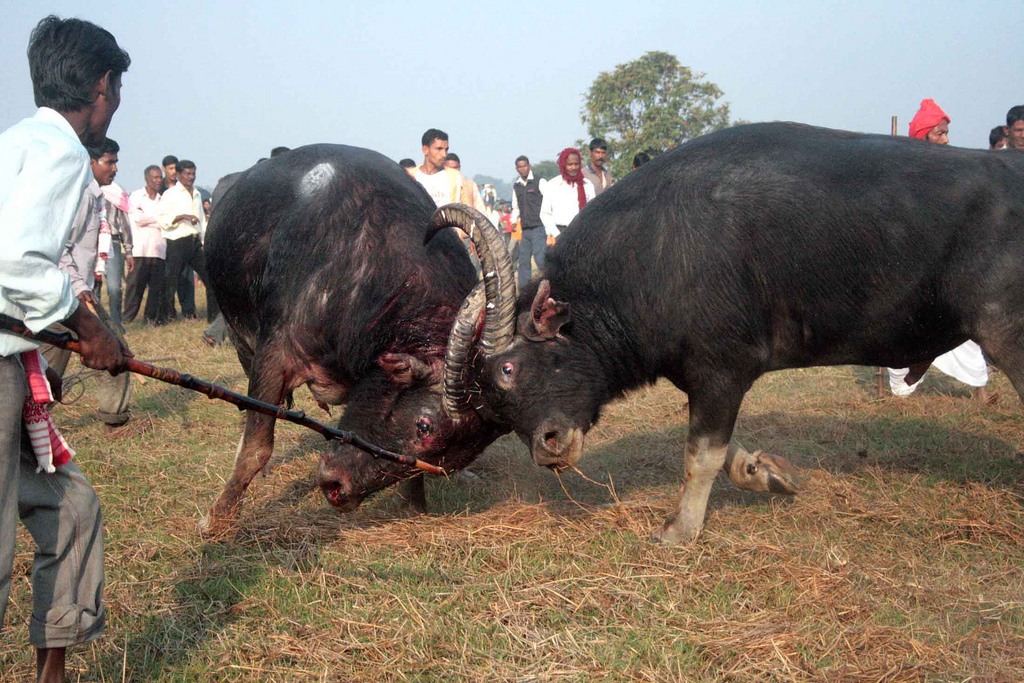
- Buffalo fighting and pot-breaking games are part of the festivities
- Ashes from bonfires are used to fertilise fields
What it is
Magh Bihu is a vibrant harvest festival celebrated mainly in Assam, North-East India, to mark the end of the annual harvesting season. It is a time when communities come together to offer thanks for the bounty of the fields and to honour ancestral traditions. The festival is deeply rooted in Assamese culture, with its rituals and feasts reflecting a close connection to the land and its cycles. For many, Magh Bihu is a moment of joy, reunion, and reflection, as families and neighbours gather around bonfires, share meals, and participate in age-old customs that celebrate both the earth’s abundance and the bonds of community.
Where it comes from
Magh Bihu traces its roots to the Tibeto-Burman cultures of the Bodo-Kachari people and is part of the broader Bihu festival cycle in Assam. The festival’s name comes from the Assamese month of Magh (January–February), and its traditions have evolved over centuries. Rituals like the Meji bonfire are linked to ancient beliefs and legends, including stories of ancestral sacrifice and the sun’s northward journey. While the festival once spanned the entire month of Magh, it is now mostly observed over two days, reflecting both continuity and adaptation within Assamese society.
How it is celebrated
Celebrations begin on Uruka, the eve of Magh Bihu, when families and communities prepare elaborate feasts featuring rice cakes (pitha), coconut sweets (laru), and traditional rice beer. Makeshift huts called Bhelaghar are built from bamboo and thatch, where people gather to eat, sing, and make merry through the night. At dawn, the main ritual involves lighting the Meji bonfire in the fields, offering prayers to ancestral gods and the God of Fire, and sharing food such as chira, curd, and mah-karai (a roasted rice and black gram mix). Traditional games like buffalo fighting and pot-breaking add excitement, while the ashes from the bonfires are later used to fertilise fields, symbolising hope for future harvests.


Joining in
If you visit Assam during Magh Bihu, you’ll find the main celebrations in villages and towns across the state, especially in rural areas. Expect to see bonfires glowing at dawn, people dressed in traditional attire, and the aroma of freshly cooked rice cakes and curries. Visitors are often welcomed to join communal feasts and observe rituals like the burning of Meji and Bhelaghar. It’s a lively, inclusive time, with music, games, and a warm sense of togetherness that makes Magh Bihu a memorable experience for newcomers.
Sources and attribution
This page is Mela's own summary, written in new words. Its facts are drawn from the Wikipedia article Magh Bihu, whose text is available under the CC BY-SA 4.0 licence, and from its Wikidata record (CC0). Each photo is credited to its author beside it. For the full account, read the originals below.
Read more
This page was written with AI assistance from the sources listed above, and checked automatically before publishing. Spotted a mistake? Tell us. Last refreshed 2026-10-02.
 Sports
 Spiritual
 Spiritual
 National days
 Seasonal
 Seasonal
 Seasonal
 Seasonal