Mid-Sha'ban
A night of prayer, forgiveness, and remembrance in the middle of Sha'ban
Mid-Sha'ban is an Islamic festival observed on the night before the 15th of Sha'ban, the eighth month of the Islamic calendar. Marked by prayers, charity, and gatherings, it is celebrated by both Sunni and Shia Muslims in countries across South Asia, Central Asia, Southeast Asia, and West Asia, with special significance for Twelver Shia as the birthday of Muhammad al-Mahdi.
- Observed on the night before the 15th of Sha'ban in the Islamic calendar
- Known as the Night of Forgiveness or Shab-e-Barat in many regions
- Marked by prayers, charity, and remembrance of ancestors
- Birthday of Muhammad al-Mahdi for Twelver Shia Muslims
- Celebrated with sweets, cemetery visits, and communal gatherings
What it is
Mid-Sha'ban is a night of devotion and reflection for Muslims, observed on the eve of the 15th day of Sha'ban. It is widely known as the Night of Forgiveness or Shab-e-Barat, and is believed by many to be a time when destinies for the coming year are set and forgiveness is granted. For Twelver Shia Muslims, this night also marks the birthday of Muhammad al-Mahdi, the twelfth Imam. Across different cultures, the night is seen as a chance to seek mercy, pray for ancestors, and gather with family and community in acts of worship and remembrance.
Where it comes from
The origins of Mid-Sha'ban are rooted in Islamic tradition, though its basis and significance have been debated among scholars. While the Qur'an does not directly mention this night, some verses and hadiths are interpreted by various communities to refer to it. The night is associated with forgiveness and the recording of destinies for the coming year. Among Twelver Shia, it is especially important as the birthday of Muhammad al-Mahdi, believed to have been born on this night in 868 CE. Over time, customs and observances have developed across regions, blending local practices with shared religious themes.
How it is celebrated
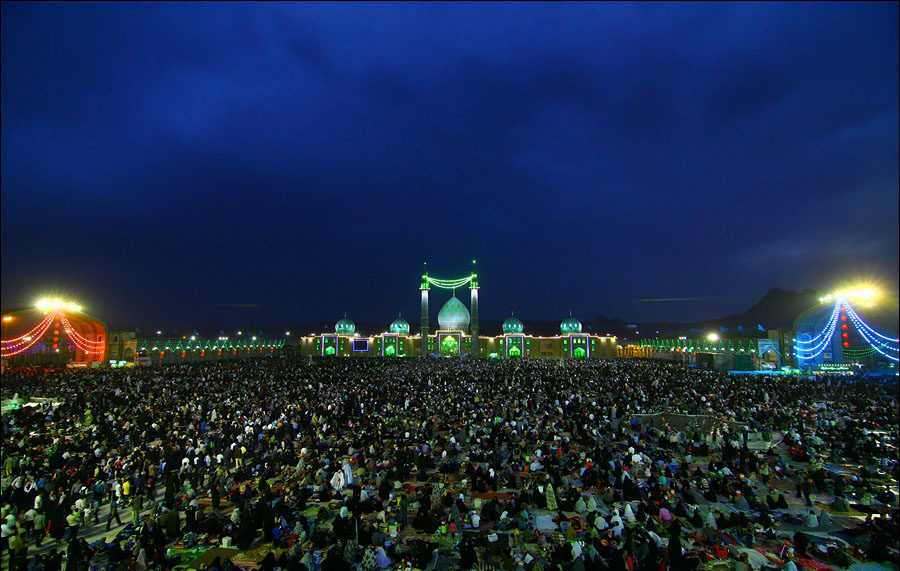
Celebrations on Mid-Sha'ban vary by region but often include special prayers, supplications, and gatherings at mosques or homes. Many Muslims spend the night in worship, seeking forgiveness for themselves and their ancestors. In South Asia, sweets such as halwa or zarda are prepared and shared with neighbors and the poor. In Iran, families clean and decorate graves, offer sweets, and light candles in cemeteries to honor the departed. In Iraq, children receive candies as they visit neighbors. Communal zikr (remembrance) sessions and religious lectures are common in parts of Indonesia. For Twelver Shia, prayers for the reappearance of Muhammad al-Mahdi and acts of charity are central, and cities may be decorated for his birthday.


Joining in
Visitors can experience Mid-Sha'ban in cities with vibrant Muslim communities, such as Qom in Iran, Lucknow in India, or Karachi in Pakistan. Expect mosques and cemeteries to be filled with families praying, sharing food, and lighting candles. In some places, streets come alive with decorations and children collecting sweets. As a newcomer, it is respectful to observe local customs, join in prayers if you wish, and accept or share food with neighbors. The atmosphere is one of reflection, generosity, and community togetherness.
Sources and attribution
This page is Mela's own summary, written in new words. Its facts are drawn from the Wikipedia article Mid-Sha'ban, whose text is available under the CC BY-SA 4.0 licence, and from its Wikidata record (CC0). Each photo is credited to its author beside it. For the full account, read the originals below.
Read more
This page was written with AI assistance from the sources listed above, and checked automatically before publishing. Spotted a mistake? Tell us. Last refreshed 2026-10-02.
More spiritual festivals
See them all Spiritual
6Jan
Epiphany🇦🇷 Argentina and 33 more countries
Spiritual
6Jan
Epiphany🇦🇷 Argentina and 33 more countries
 Spiritual
5Jan
Isra and Mi'raj🇩🇿 Algeria and 12 more countries
Spiritual
5Jan
Isra and Mi'raj🇩🇿 Algeria and 12 more countries
 Spiritual
7Feb
Tết🇻🇳 Vietnam and 9 more countries
Spiritual
7Feb
Tết🇻🇳 Vietnam and 9 more countries
 Spiritual
19Jan
Timkat🇪🇷 Lalibela, Eritrea and 1 more country
Spiritual
19Jan
Timkat🇪🇷 Lalibela, Eritrea and 1 more country
 Spiritual
23Jan
Tu BiShvat🇮🇱 Israel
Spiritual
23Jan
Tu BiShvat🇮🇱 Israel
 Spiritual
Janvaries
Vasant Panchami🇮🇳 India and 4 more countries
Spiritual
Janvaries
Vasant Panchami🇮🇳 India and 4 more countries
 Spiritual
1Jan
Hatsumōde🇯🇵 Tokyo, Japan
Spiritual
1Jan
Hatsumōde🇯🇵 Tokyo, Japan
 Spiritual
17Jan
Sinulog Festival🇵🇭 Cebu City, Philippines
Spiritual
17Jan
Sinulog Festival🇵🇭 Cebu City, Philippines