
Timkat
Epiphany celebrated with water rituals and vibrant processions in Ethiopia and Eritrea
Timkat is the Ethiopian and Eritrean Orthodox celebration of Epiphany, held every 19 January (or 20 January in a leap year). Marking the baptism of Jesus in the River Jordan, it features processions, water blessings, and communal festivities, with major events in Ethiopia and Eritrea.
- Celebrates the baptism of Jesus in the River Jordan
- Tabot (Ark replica) is carried in procession and blessed
- Water rituals symbolize renewal of baptismal vows
- UNESCO-listed as Intangible Cultural Heritage
- Major celebrations in Ethiopia and Eritrea
What it is
Timkat is the grand festival of Epiphany in the Ethiopian and Eritrean Orthodox Tewahedo Churches, commemorating the baptism of Jesus in the River Jordan. The heart of the celebration is a dramatic reenactment of this baptism, bringing together communities in a blend of solemn ritual and joyful festivity. The festival is deeply meaningful to participants, symbolizing spiritual renewal and the reaffirmation of baptismal vows. For many, Timkat is the most significant religious holiday of the year, a time when faith, tradition, and community come together in a vivid public expression.
Where it comes from
Timkat traces its origins to the early Christian tradition of Epiphany, which celebrates the revelation of Jesus as the Messiah at his baptism. In Ethiopia and Eritrea, the festival has developed unique rituals centered around the Tabot, a sacred replica of the Ark of the Covenant, which is carried in procession and rarely seen by the laity except during Timkat. Over centuries, these traditions have become central to the religious and cultural life of Orthodox communities, blending ancient Christian beliefs with local customs. In 2019, UNESCO recognized Timkat as part of the Intangible Cultural Heritage of Humanity.
How it is celebrated
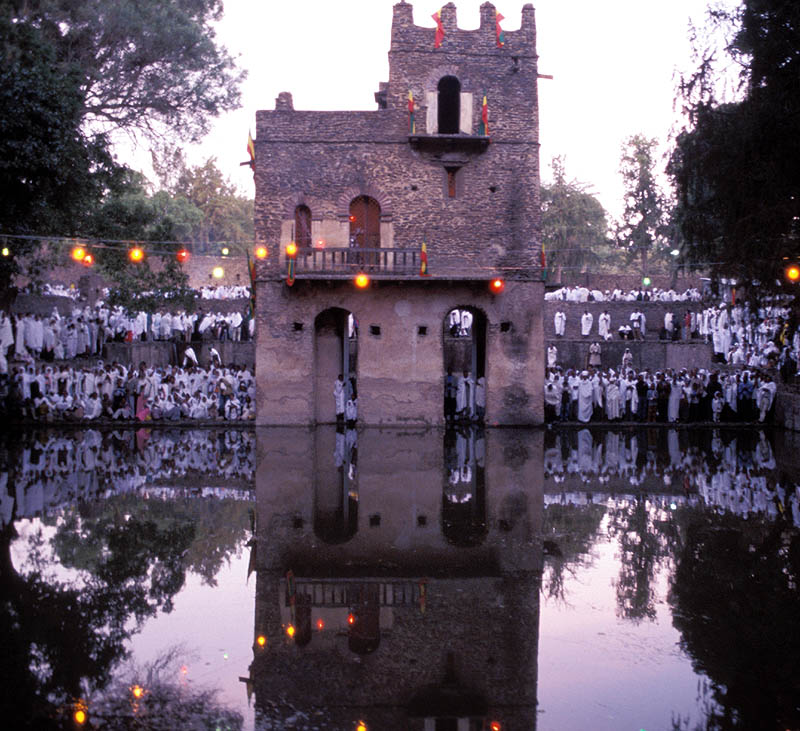
Celebrations begin before dawn, with priests carrying the Tabot, wrapped in rich cloth, to a nearby body of water in a colorful procession. The Divine Liturgy is held outdoors, often starting around 2 a.m., followed by the blessing of the water at dawn. Participants are sprinkled with the blessed water, and many immerse themselves, symbolically renewing their baptism. The return procession of the Tabot is a vibrant spectacle, with clergy in ornate robes and umbrellas, elders and men singing hymns, women dressed in their finest, and children joining in the festivities. The day concludes with communal feasting and continued celebration, making Timkat a joyful and unifying event.
Joining in
Visitors can experience Timkat in towns and cities across Ethiopia and Eritrea, with especially large celebrations in places like Lalibela. Expect large crowds, early morning rituals by rivers or pools, and lively processions full of music, color, and community spirit. As a guest, it is respectful to observe the rituals quietly and dress modestly. The atmosphere is welcoming, and witnessing Timkat offers a unique insight into the faith and traditions of the Orthodox communities.
Sources and attribution
This page is Mela's own summary, written in new words. Its facts are drawn from the Wikipedia article Timkat, whose text is available under the CC BY-SA 4.0 licence, and from its Wikidata record (CC0). Each photo is credited to its author beside it. For the full account, read the originals below.
Read more
- Timkat on WikipediaEncyclopedia
- UNESCO Intangible Cultural HeritageArticle
- More photos on Wikimedia CommonsPhotos
- Wikidata recordOpen data
This page was written with AI assistance from the sources listed above, and checked automatically before publishing. Spotted a mistake? Tell us. Last refreshed 2026-10-02.
 Spiritual
 Spiritual
 Spiritual
 National days
 Spiritual
 Spiritual
 Spiritual
 Spiritual