
Thiruvathira
A celebration of Shiva’s cosmic dance and marital harmony in South India
Thiruvathira is a Hindu festival celebrated mainly in Kerala and Tamil Nadu, honouring Lord Shiva’s cosmic dance and the union of Shiva and Parvati. Observed in the Tamil month of Margazhi (December–January) or Malayalam Makaram (January–February), it features fasting, rituals, and traditional dances, especially by women.
- Grand 10-day festival at Chidambaram’s Nataraja Temple
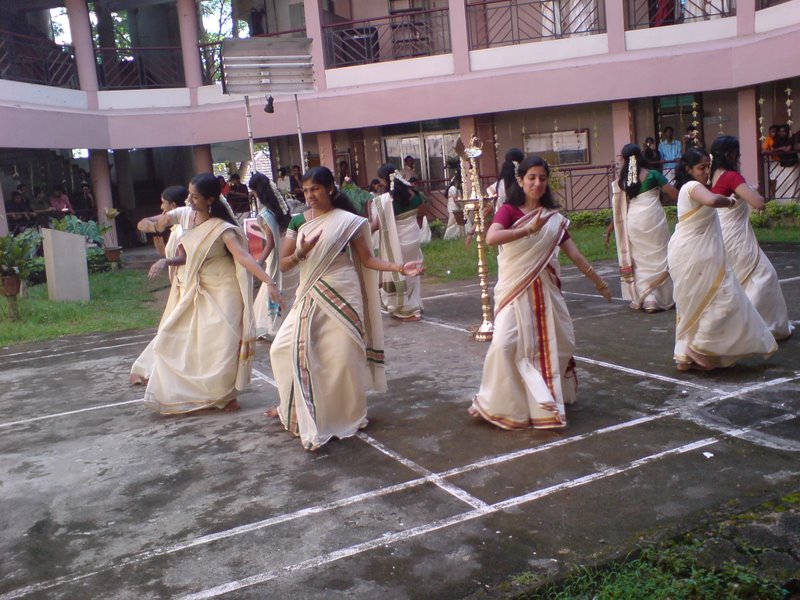
- Women perform Thiruvathirakali, a traditional group dance in Kerala
- Special dishes like Thiruvathira Kali and puzhukku are prepared
- Chariot processions and cosmic dance reenactments in Tamil Nadu
- Observed on the full moon night of Margazhi or Makaram
What it is
Thiruvathira is a festival dedicated to Lord Shiva, celebrated with deep devotion in Kerala and Tamil Nadu. It marks the occasion of Shiva’s Ananda Tandava, the cosmic dance that represents the cycles of creation and dissolution. In Kerala, it also commemorates the union of Shiva and Parvati, symbolizing marital harmony and the Ardhanarishvara form. The festival is especially significant for women, who observe rituals and dances to seek blessings for their families and marriages. For devotees, Thiruvathira is a time to reflect on the divine energy that animates the universe and to come together in community worship.
Where it comes from
Thiruvathira, also known as Arudhra Darisanam, has been celebrated for over 1,500 years, with historical records and temple inscriptions attesting to its antiquity. The festival is observed on the full moon night of Margazhi, the longest night of the year, and is rooted in Tamil Shaivite tradition. Legends tell of sages and divine beings performing penance to witness Shiva’s cosmic dance at Chidambaram, where the deity granted them this vision. In Kerala, the festival’s origins are linked to the union of Shiva and Parvati, as well as the myth of Kamadeva’s death, both underscoring themes of devotion and transformation.
How it is celebrated
Celebrations vary by region but share common threads of devotion and ritual. In Tamil Nadu, grand festivities unfold at the Nataraja Temple in Chidambaram, with a ten-day festival culminating in sacred ablutions, processions, and the symbolic reenactment of Shiva’s cosmic dance. Married women observe a ten-day fast, breaking it after moonrise on Thiruvathira. In Kerala, women fast and prepare special dishes like Thiruvathira Kali and puzhukku, abstaining from rice. The highlight is Thiruvathirakali, a graceful group dance performed around a traditional lamp, accompanied by songs praising Shiva and Parvati. Women wear traditional attire and jasmine garlands, expressing joy and hope for marital bliss. Across temples, rituals include puja, abhisheka (ritual bathing), and chariot processions.



Joining in
Visitors can experience Thiruvathira most vibrantly at the Nataraja Temple in Chidambaram, Tamil Nadu, and in temples and homes across Kerala. Expect early morning rituals, lively processions, and the mesmerizing Thiruvathirakali dance. As a newcomer, you may observe or respectfully join public celebrations, sample festive foods, and witness the deep communal spirit. In Kerala, local communities welcome visitors to watch the dances and partake in the festive atmosphere, especially in Kollam district and major temples.
Sources and attribution
This page is Mela's own summary, written in new words. Its facts are drawn from the Wikipedia article Thiruvathira, whose text is available under the CC BY-SA 4.0 licence, and from its Wikidata record (CC0). Each photo is credited to its author beside it. For the full account, read the originals below.
Read more
This page was written with AI assistance from the sources listed above, and checked automatically before publishing. Spotted a mistake? Tell us. Last refreshed 2026-10-02.
 Sports
 Spiritual
 Spiritual
 National days
 Spiritual
 Spiritual
 Spiritual
 Spiritual