
Beltane
A Gaelic festival marking the start of summer with fire and flowers.
Beltane is the Gaelic May Day festival, celebrated on 1 May in Ireland, Scotland, and the Isle of Man. Marking the beginning of summer, it features bonfires, rituals for protection and growth, and vibrant decorations of flowers and May bushes.
- Bonfires are lit for protection and blessings.
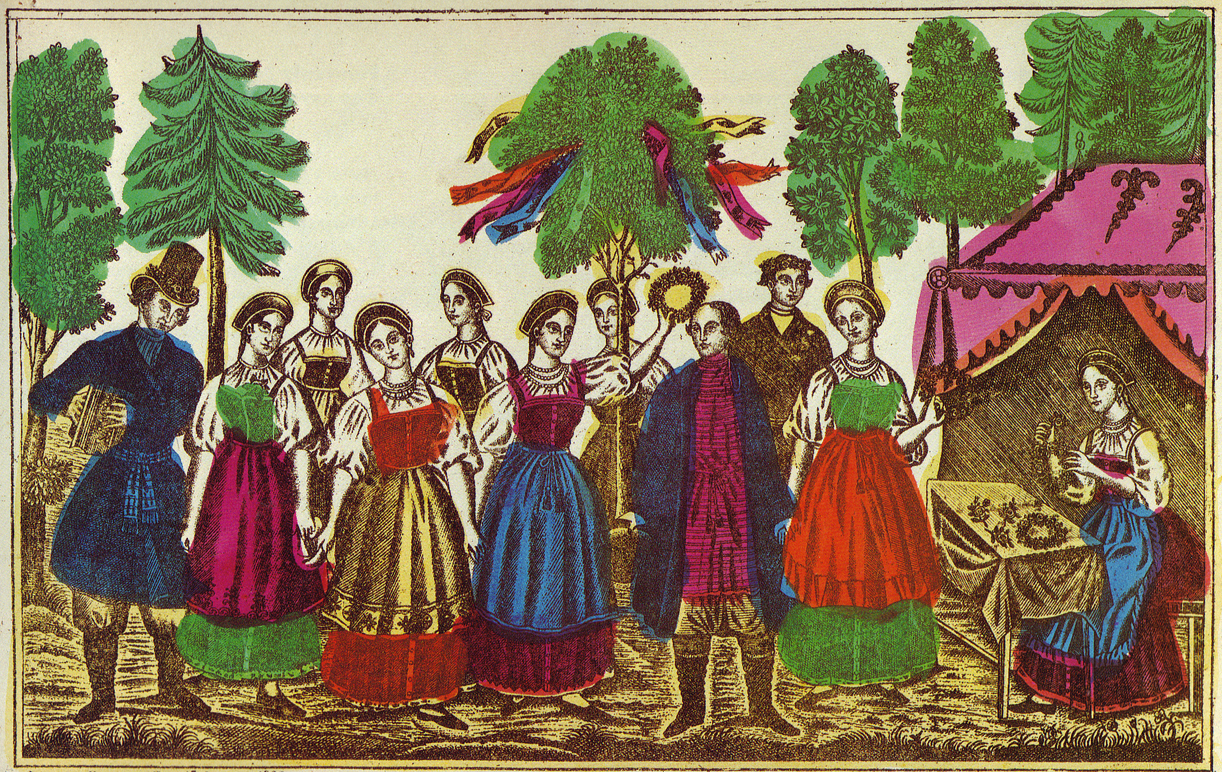
- May Bushes are decorated with flowers and ribbons.
- Cattle were traditionally driven between fires.
- Offerings are made to the aos sí, or fairy folk.
- Celebrated mainly in Ireland, Scotland, and the Isle of Man.
What it is
Beltane is a traditional Gaelic festival that signals the arrival of summer. Historically, it was a time when communities gathered to perform rituals for the protection of cattle, people, and crops, and to encourage growth and fertility. The festival is deeply rooted in Irish and Scottish culture, with customs that reflect a close relationship with the land and the changing seasons. For many, Beltane is a celebration of light, warmth, and the promise of abundance, and it holds a special place in the cycle of the year as one of the four main Gaelic seasonal festivals.
Where it comes from
Beltane’s origins lie in the pastoral traditions of the Gaelic peoples, when herders would move their livestock to summer pastures. The earliest references appear in Old Irish literature, describing rituals involving fire and the driving of cattle between bonfires to protect them from harm. Scholars believe Beltane shares roots with similar ancient festivals across Europe, such as the Roman Parilia, which also involved cleansing fires and offerings before moving animals to summer grazing. Over centuries, Beltane became woven into local myth and folklore, with place names in Ireland still bearing its mark.
How it is celebrated
Central to Beltane celebrations are the lighting of bonfires, whose flames and smoke are believed to offer protection and blessings. Traditionally, all household fires would be extinguished and then relit from the communal Beltane fire. People and cattle would walk around or between the fires, and sometimes leap over the embers. Homes, byres, and livestock are decorated with yellow May flowers, thought to evoke the power of fire. In some areas, a May Bush—often a thorn branch adorned with flowers, ribbons, and shells—is made and displayed. Feasting accompanies the rituals, with portions of food and drink offered to the aos sí, or fairy folk. Visits to holy wells and the collection of Beltane dew, believed to bring beauty and youth, are also part of the tradition.


Joining in
Today, Beltane customs have been revived in parts of Ireland and Scotland as local cultural events. The Hill of Uisneach in County Westmeath, Ireland, is known for its Beltane bonfire gatherings. Visitors can expect vibrant displays of fire, music, and traditional crafts, with communities coming together to mark the turning of the seasons. While some celebrations are intimate and local, others welcome newcomers who wish to experience the warmth, symbolism, and communal spirit of this ancient festival.
Sources and attribution
This page is Mela's own summary, written in new words. Its facts are drawn from the Wikipedia article Beltane, whose text is available under the CC BY-SA 4.0 licence, and from its Wikidata record (CC0). Each photo is credited to its author beside it. For the full account, read the originals below.
Read more
This page was written with AI assistance from the sources listed above, and checked automatically before publishing. Spotted a mistake? Tell us. Last refreshed 2026-10-02.
 Spiritual
 Sports
 Seasonal
 Seasonal
 Seasonal
 Seasonal
 Seasonal
 Seasonal