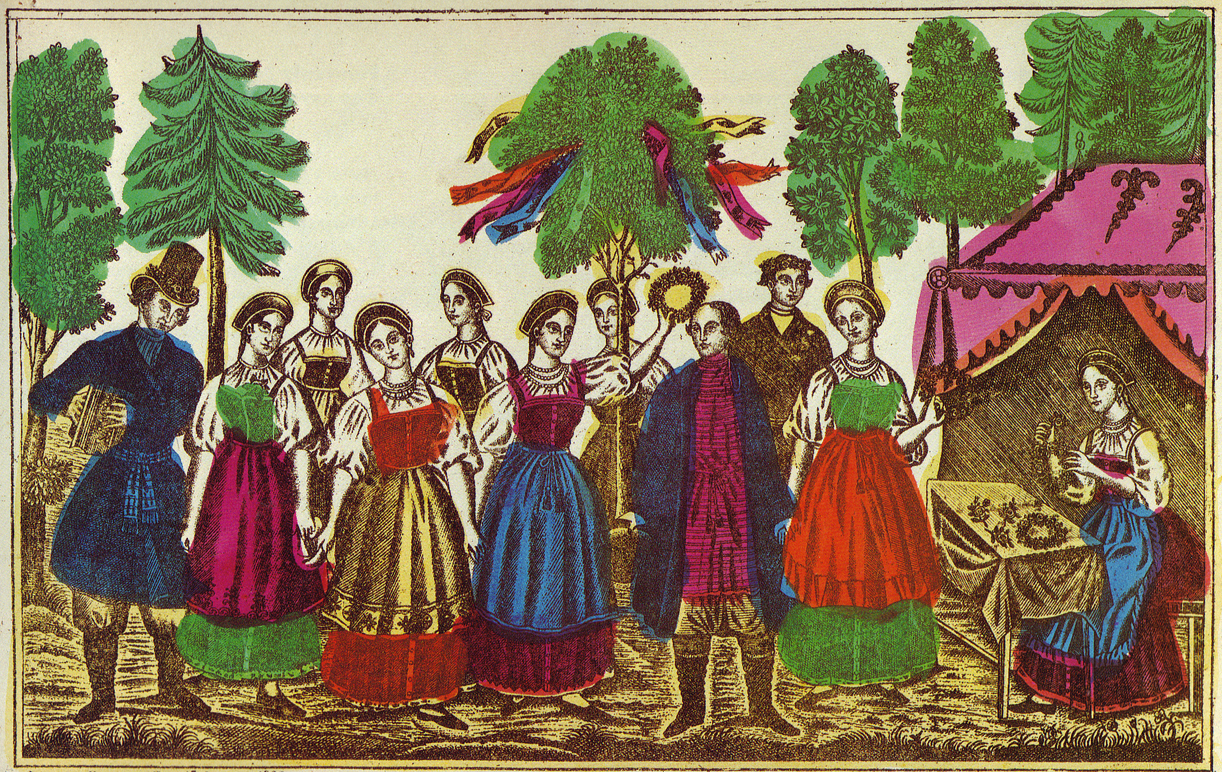
Green Week
A Slavic festival of greenery, remembrance, and spring’s renewal
Green Week is a traditional Slavic seasonal festival celebrated in early June, especially in Ukraine, Russia, and neighboring countries. Marking the week before Pentecost, it blends spring agricultural rites with the veneration of the dead, featuring rituals with birch trees, offerings, and communal gatherings.
- Birch trees are decorated and honored as symbols of life and renewal
- Girls weave garlands and offer eggs to birches for a good harvest
- Graves and homes are adorned with green branches and sweet flag
- Special breads are baked and shared in remembrance of ancestors
- Processions bless fields and wells to protect crops and attract rain
What it is
Green Week is a vibrant Slavic festival that marks the arrival of late spring and the promise of summer. Celebrated in the week leading up to Pentecost, it is a time when communities honor both the renewal of nature and the memory of ancestors. The festival is deeply rooted in rural traditions, with rituals that express hopes for fertile fields and healthy harvests. Greenery, especially birch branches, adorns homes and graves, symbolizing life and protection. For many, Green Week is a bridge between the living and the departed, blending joy, remembrance, and the rhythms of the agricultural year.
Where it comes from
Green Week’s origins lie in ancient Slavic customs that intertwined the cycles of nature with the spiritual world. The festival’s timing—seven weeks after Easter—reflects its connection to both Christian and pre-Christian traditions. Many of its rituals, such as honoring birch trees and venerating the dead, echo older beliefs in the power of nature spirits and ancestral protection. Over time, these customs merged with the Christian calendar, especially the observance of Pentecost, creating a unique blend of agricultural, spiritual, and communal practices that continue in various forms across Eastern Europe.
How it is celebrated
Celebrations of Green Week vary by region but share common threads. In Russia, the Thursday known as Semik is marked by funeral rites for those who died untimely deaths, and birch trees are decorated or carried in procession as symbols of vitality and as hosts for ancestral souls. Girls weave garlands, offer eggs and beer to birches, and make vows of friendship, while a chosen birch may be ceremonially destroyed to encourage rainfall. In Ukraine, homes and graves are adorned with green branches—linden, willow, maple, and especially sweet flag, which is believed to ward off evil. Special breads and foods are prepared, and families visit cemeteries to remember loved ones with prayers and feasts. Processions to bless fields and wells are common, invoking protection and a fruitful harvest. Throughout, the presence of rusalki—nature spirits linked to water and fertility—is acknowledged, and certain precautions, like avoiding swimming, are observed to keep their influence at bay.


Joining in
To experience Green Week, visitors should seek out rural communities in Ukraine, Russia, or neighboring countries during early June. Expect to see villages decorated with fresh greenery and to witness processions to cemeteries or fields, often accompanied by local priests and communal prayers. Participation is respectful and often welcomed, especially if you join in decorating homes or sharing in the special breads and festive meals. Observing the rituals around birch trees and the blessing of wells or fields offers a window into the deep connection between people, land, and tradition during this unique time.
Sources and attribution
This page is Mela's own summary, written in new words. Its facts are drawn from the Wikipedia article Green week, whose text is available under the CC BY-SA 4.0 licence, and from its Wikidata record (CC0). Each photo is credited to its author beside it. For the full account, read the originals below.
Read more
- Green week on WikipediaEncyclopedia
- Encyclopaedia BritannicaArticle
- More photos on Wikimedia CommonsPhotos
- Wikidata recordOpen data
This page was written with AI assistance from the sources listed above, and checked automatically before publishing. Spotted a mistake? Tell us. Last refreshed 2026-10-02.
 Spiritual
 Seasonal
 National days
 Seasonal
 Seasonal
 Seasonal
 Seasonal
 Seasonal