
Royal Ploughing Ceremony
A royal rite marking the start of the rice-growing season in Cambodia and Thailand
The Royal Ploughing Ceremony is an ancient royal ritual held each year in Cambodia and Thailand to mark the beginning of the rice-planting season. Presided over by royalty or their representatives, the ceremony blends Hindu and Buddhist traditions and features sacred oxen, ritual ploughing, and predictions for the coming harvest.
- Sacred oxen plough a ceremonial furrow to start the rice season
- Royalty or appointees lead the ploughing in traditional dress
- Astrologers predict the harvest based on the oxen's food choices
- Held annually in Cambodia and Thailand
- Blends Hindu and Buddhist rituals
What it is
The Royal Ploughing Ceremony is a centuries-old festival that signals the start of the rice-growing season in Cambodia and Thailand. Deeply rooted in royal tradition, it is performed to bless the land and ensure a prosperous harvest. The event is both a spiritual and agricultural milestone, blending ritual, symbolism, and community gathering. The ceremony is seen as a bridge between the monarchy and the people, with the king or a royal appointee taking an active role in the ritual. For many, it is a moment of hope and renewal, tied to the rhythms of rural life and the promise of the new crop.
Where it comes from
The origins of the Royal Ploughing Ceremony trace back to ancient India, with references in the Ramayana where the heroine Sita emerges from ploughed earth during a royal ceremony. In Cambodia, the tradition dates to the Funan period (1st–6th century), and archaeological finds such as a 6th-century statue of Balarama holding a plough attest to its antiquity. The rite has long been a key royal ceremony, appearing in local adaptations of Indian epics and Buddhist literature. In Thailand, the ceremony has Hindu roots and was later combined with Buddhist elements, reflecting the region's layered religious history.
How it is celebrated
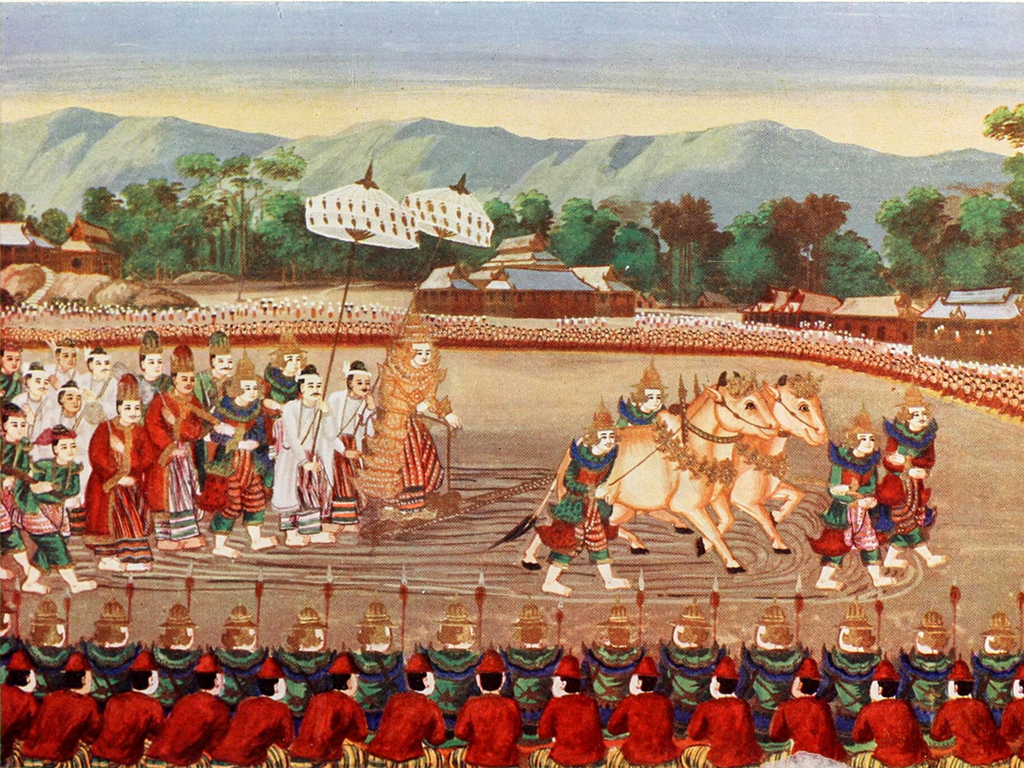
During the ceremony, two sacred oxen are yoked to a wooden plough and guided by a royal figure or appointee to cut the first furrow in a ceremonial field. Court Brahmins sow rice seed as the oxen plough, and after the ritual, the oxen are presented with various foods—rice, corn, beans, sesame, grass, water, and rice whisky. The choices the oxen make are interpreted by astrologers and Brahmins to predict the fortunes of the coming agricultural year. The ceremony is rich in symbolism, combining Hindu and Buddhist rites, and is often accompanied by prayers, offerings, and traditional dress. In Thailand, the event takes place at Sanam Luang in Bangkok, while in Cambodia it is held under royal auspices, sometimes with the monarch himself guiding the plough.


Joining in
Visitors can witness the Royal Ploughing Ceremony in Phnom Penh, Cambodia, or at Sanam Luang near the Grand Palace in Bangkok, Thailand. The event is open to the public and draws large crowds, including farmers, officials, and tourists. Expect to see elaborate pageantry, traditional costumes, and a blend of solemn ritual and festive atmosphere. Arriving early is recommended, as the ceremony is a highlight of the agricultural calendar and a unique opportunity to observe a living royal tradition.
Sources and attribution
This page is Mela's own summary, written in new words. Its facts are drawn from the Wikipedia article Royal Ploughing Ceremony, whose text is available under the CC BY-SA 4.0 licence, and from its Wikidata record (CC0). Each photo is credited to its author beside it. For the full account, read the originals below.
Read more
- Royal Ploughing Ceremony on WikipediaEncyclopedia
- More photos on Wikimedia CommonsPhotos
- Wikidata recordOpen data
This page was written with AI assistance from the sources listed above, and checked automatically before publishing. Spotted a mistake? Tell us. Last refreshed 2026-10-02.
 Spiritual
 Cultural
 Cultural
 Cultural
 Seasonal
 Seasonal
 Seasonal
 Seasonal